

By Vincent R. Pozon
From $300 fiber-optic drones in Lebanon to an effectively shuttered Strait of Hormuz to a rusting World War II hulk in the South China Sea, the world’s largest militaries are being humbled by the world’s cheapest weapons — and the implications run all the way to Manila.
The View from the Man on the Shore
The author writes from a lifetime in communications and from a growing sense that much of what we are told no longer explains what is actually happening in the world. The evidence is scattered everywhere — in battlefield footage, interviews, and the recorded observations of journalists, analysts, and former generals — but rarely assembled into a single argument.
The Story No Longer Holds
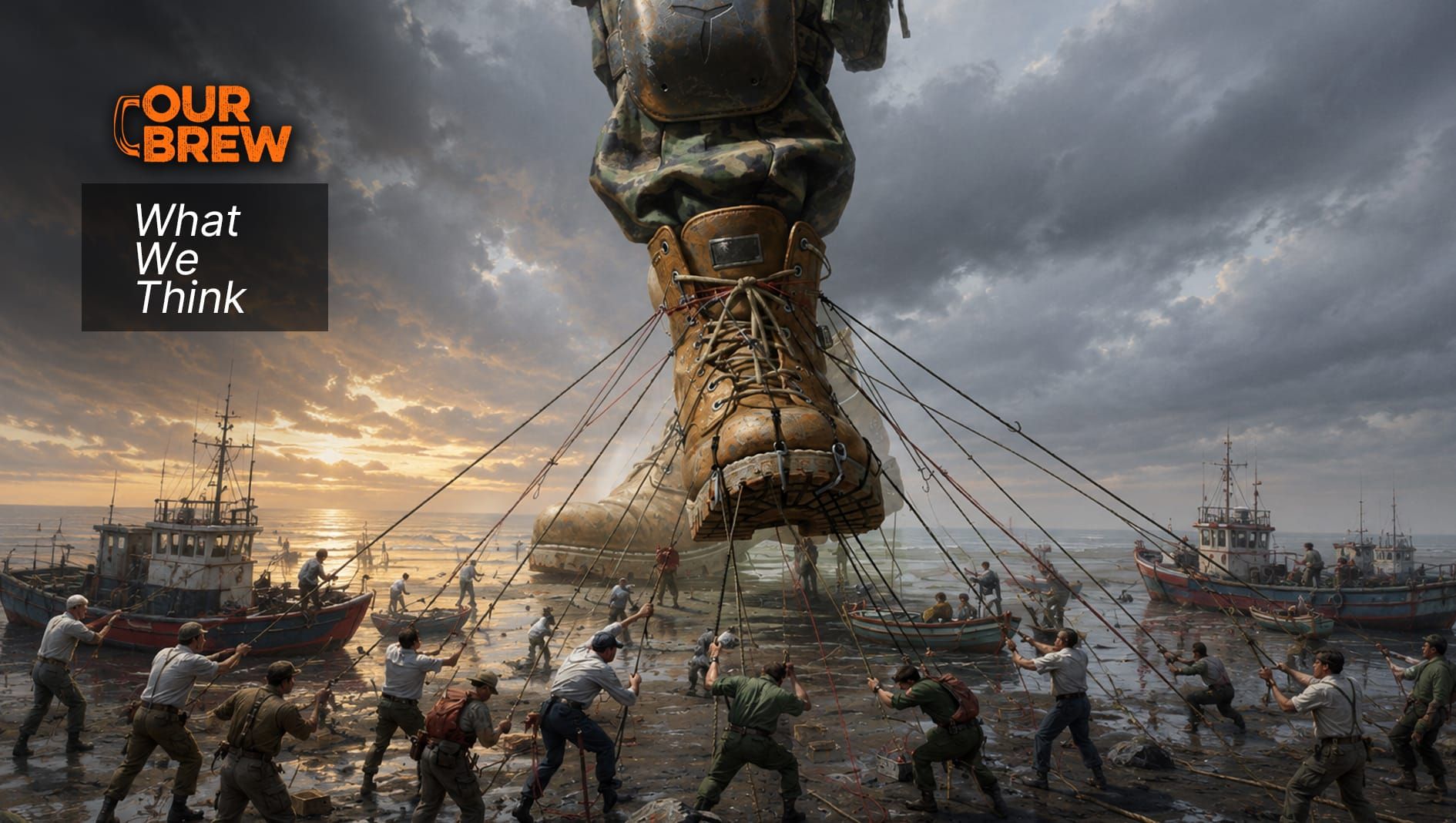
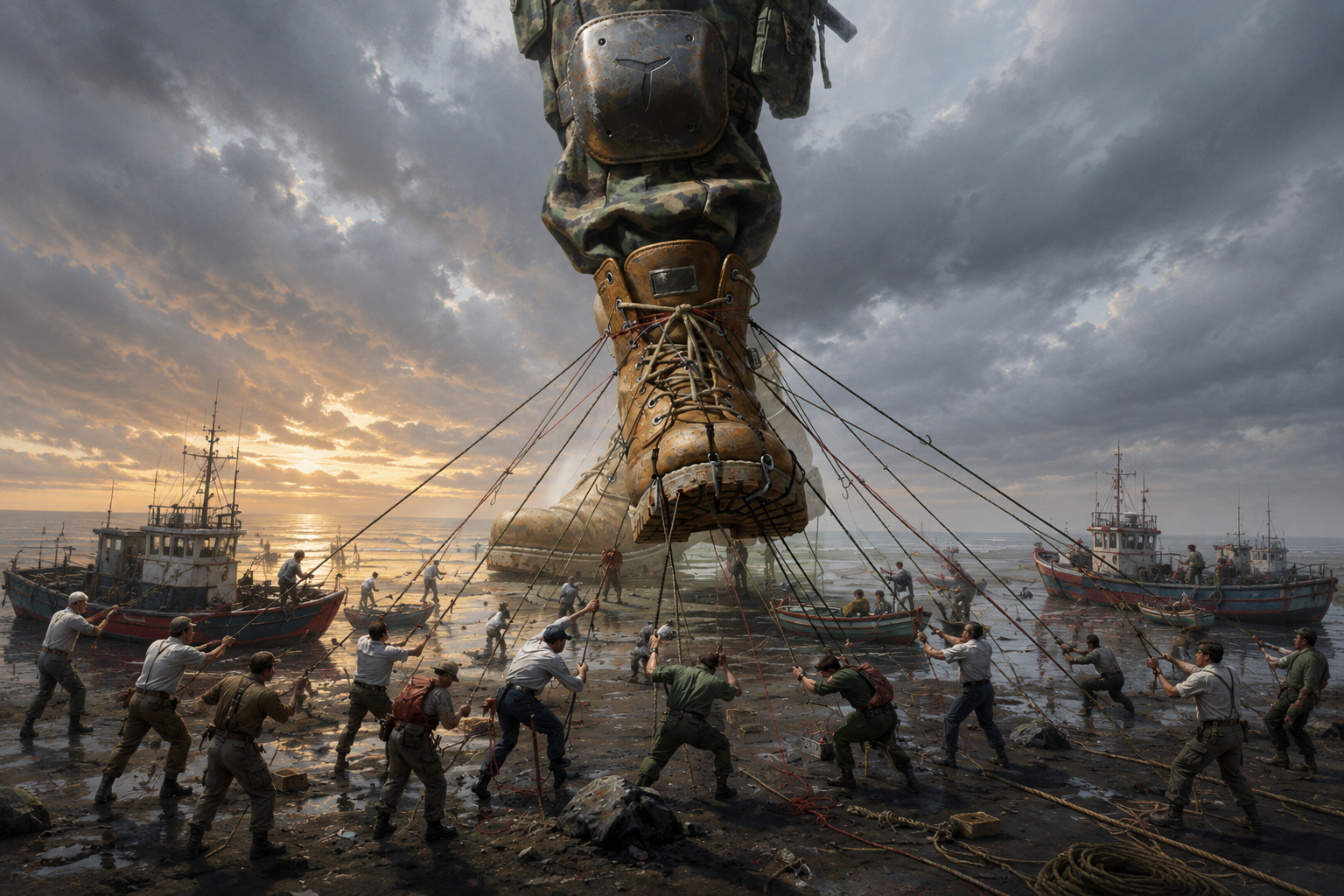
When fellow Filipinos say we need America by our side because standing up to a behemoth like China is like David going up against Goliath, they forget recent history. That despite the most awesome weapons the military industry can create, the United States was mired in Afghanistan for two decades, and today must acknowledge that the Taliban weathered the bunker-busters and became the force with which Washington had to negotiate its exit. That despite billions of dollars and massive arming, Iraq is far from a “mission accomplished,” today or then. That despite invasion, embargoes, and assassination plots, the United States today quietly endures the uncomfortable nearness of Cuba.
Then there is Vietnam. They humbled two Western powers in succession. The French were sent packing, and years later the Americans withdrew in defeat. The legend of Western invincibility did not survive Vietnam.
Oh, and not to forget the older lesson: David won.
One cannot help noticing the repetition: the giant arrives with bigger guns and arrogance. The smaller power is expected to collapse. Then it does not. The shape of war has changed — and it has changed against the giants.
Lebanon: $300 against billions
Hezbollah, massively outgunned by Israel, now flies low-cost first-person-view drones threaded with fiber-optic cable so they cannot be jammed by conventional electronic warfare systems. Some are made from commercially available parts and local fabrication, fitted with anti-armor charges, and flown toward the weak points of armored vehicles.
CNN called the drones “a potent new weapon designed to evade Israeli detection,” and Israeli defense sources have acknowledged that there is no simple or magical answer to the problem.
Israel’s Three Shields, All Leaking
Israel has spent decades building what is one of the most layered air-defense systems in the world: the more known Iron Dome at the bottom for short-range rockets, David’s Sling in the middle, and Arrow at the top for ballistic missiles. The architecture is elegant, the engineering extraordinary, and the cost staggering.
Each tier has now been embarrassed. In 2023, Hamas swamped Iron Dome by saturation — more cheap rockets at once than the system could knock down. When Iran launched waves of drones and missiles, Israel and its allies reportedly spent something like a billion dollars beating back an attack that cost Iran only a small fraction of that. Each interceptor runs into the millions; each incoming drone costs a sliver of that.
Hormuz: A Navy Without a Navy
In the Strait of Hormuz, Iran has done what the world’s most powerful navy could not prevent. It made good on a threat it had held in reserve for decades: it effectively shuttered the Strait – with small boats, missiles, sea mines, drones, and nerve.
CNN’s earlier headline was blunt and prescient: “Why Iran has the advantage in the Strait of Hormuz.” The answer, we now know, is that billion-dollar warships do not automatically defeat cheaper, distributed forms of sea denial.
i
Yemen and Ukraine
In Yemen, a movement most of the world had dismissed disrupted Red Sea traffic with cheap drones, missiles, and speedboats, embarrassing destroyers that cost billions to build. The United States assembled a large naval effort, Operation Prosperity Guardian, to protect shipping. By 2024, Vice Admiral George Wikoff, then head of US naval forces in the Middle East, admitted publicly that US strikes and defensive efforts had done little to change Houthi behavior. In 2025, Washington agreed to a ceasefire with the Houthis. The most expensive military in human history had not defeated a militia armed with cheap, flexible tools.
In the Black Sea, Ukraine — a country whose conventional navy was devastated early in the war — has sunk or disabled roughly a third of Russia’s Black Sea Fleet and forced much of the rest to retreat. A country with almost no navy has rendered one of the world’s major fleets far less useful. On land, drones, electronic warfare, trenches, and artillery have blunted the advance of one of the largest conventional armies on earth.
 Alisa Orlova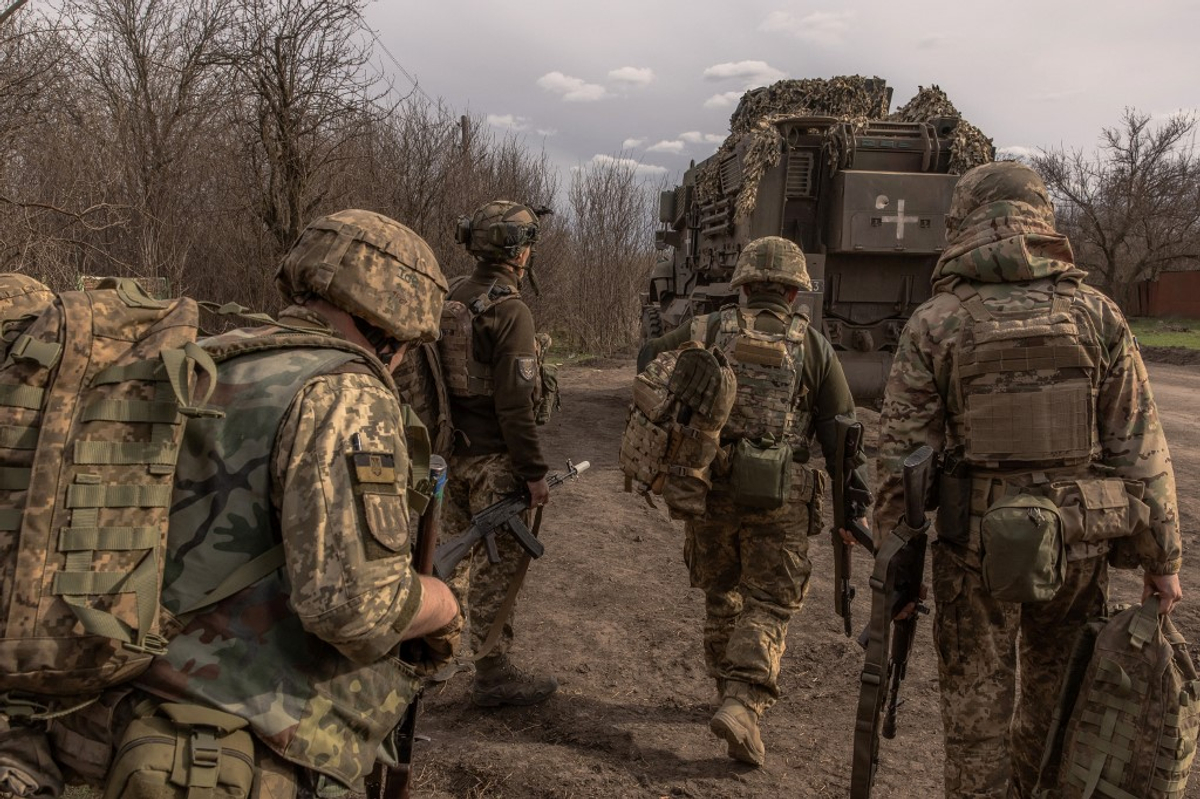
The Math Nobody Can Solve
A one-way attack drone of the kind Iran builds — the Shahed — costs in the tens of thousands of dollars. The American Patriot missile fired to stop it costs several millions. Let that sink in. After months of watching this air war, Saudi Arabia, Qatar, and the United Arab Emirates — all longtime American security clients — turned to Ukraine for defense cooperation on air defense, drone technology at a fraction of the American price.
Notice the pattern in each of these wars: the giant expected a quick, clean victory and did not get one. We all expected to take Kyiv in days; four years later, it is mired in mud. Iran was expected by some observers to be “like Venezuela,” finished in a week or two; instead it survived, answered, kept leverage over Hormuz, and dared the Americans to consider the risks of a ground war.
This is what the giants keep discovering: the smaller power does not need to win quickly. It only needs not to lose quickly.
Two Long Defeats
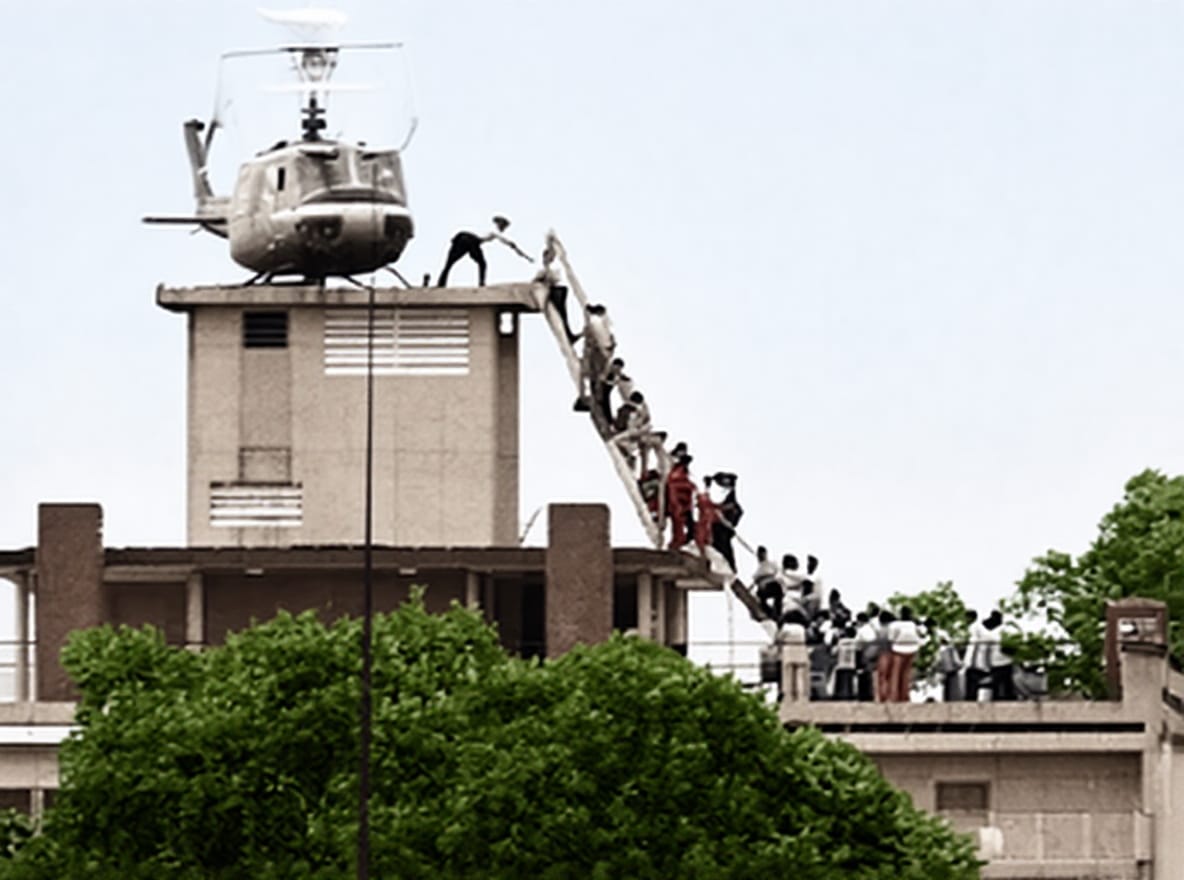
Vietnam cost the United States an estimated trillion-plus dollars in today’s money, more than 58,000 American dead, and ended with helicopters scrambling out of Saigon. Afghanistan cost more than $2.3 trillion, more than 2,300 American dead, and ended with the Taliban back in Kabul.
Vo Nguyen Giap led soldiers in sandals and slippers; he had no formal military training. He defeated the French at Dien Bien Phu and conceived the strategy of protracted people’s war that helped make American victory impossible. “Surrender,” he said, “is not a word in my vocabulary.”
What Does Any of This Have to Do With Us?
Everything. We are a country told, again and again, that we are too small to defend ourselves, that we need a giant in our corner.
Stubbornness as Doctrine
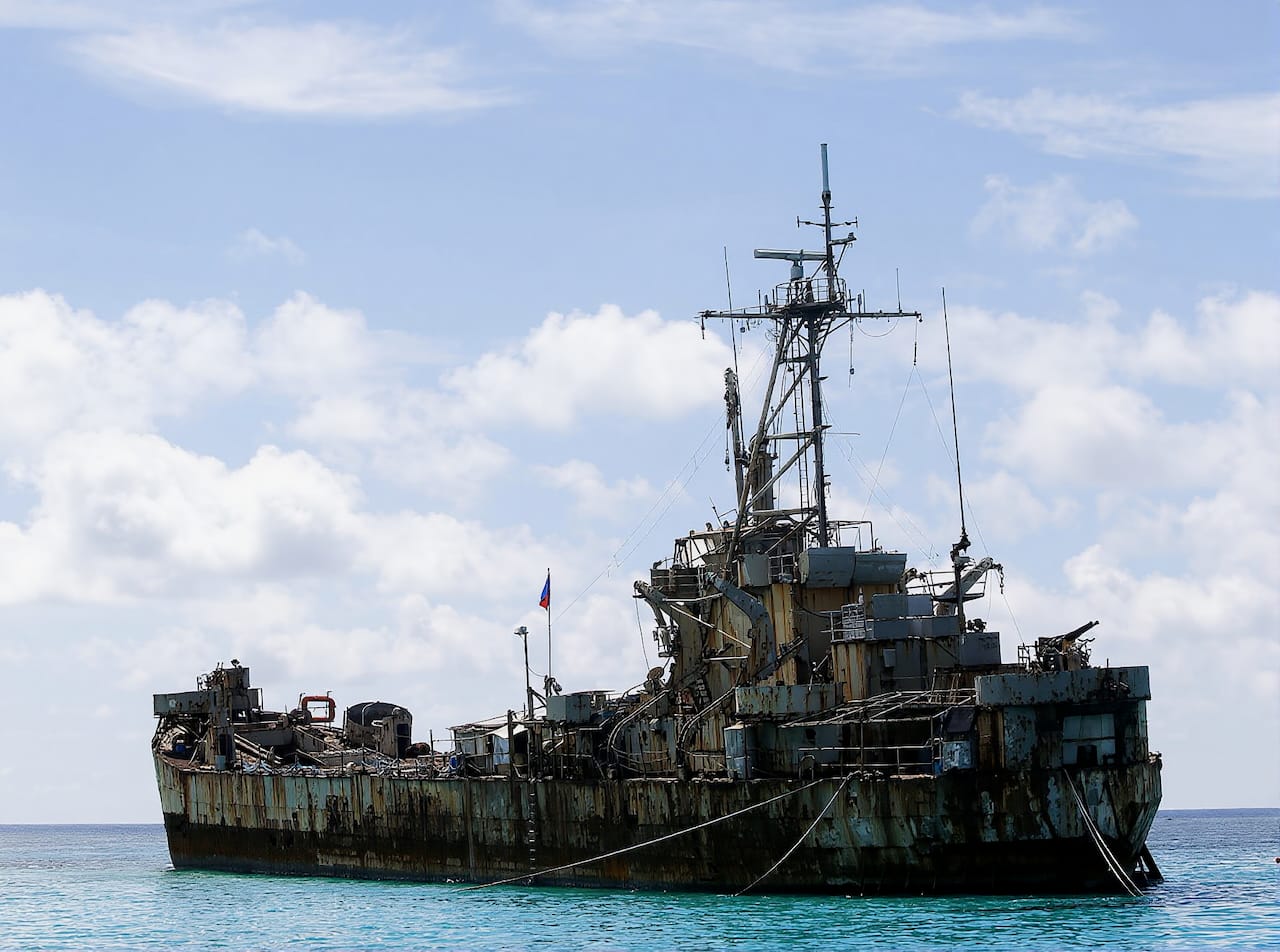
The BRP Sierra Madre, a World War II–era hulk has held off the largest navy in the world for decades simply by refusing to sink. That decrepit ship is classified as an “active military vessel”. It was run aground on Ayungin Shoal, intentionally, which made it a "strategic outpost of Philippine sovereignty. Any effort to undermine its presence at Ayungin Shoal challenges the territorial integrity of the Republic of the Philippines and will be met with firm resistance", assures Foreign Secretary Gibo Teodoro.
One Fisherman, One Boat
In the endless cat-and-mouse around Bajo de Masinloc, during a standoff between a Philippine vessel and the China Coast Guard, a lone Filipino fisherman casually steered into contested waters, was chased off by Chinese boats, and embarrassed Beijing as cameras rolled. One man on a small boat. His cry: “Atin ito.”
Ronald Llamas, political commentator, strategist, and former political affairs adviser, put it best: Maliit nga tayo, pero kayang makapuwing. That is not bravado. That is, exactly, the new warfare.

A Different Way of Thinking About Defense
Scott Ritter, the former US Marine Corps intelligence officer and UN weapons inspector, put it plainly: “We have to stop being married to legacy systems like large amphibious shipping because we put all our resources into one basket. That may work in the old school where you could park a ship off the coast and get the landing party ashore.” A man who spent his career inside the most powerful military on earth is arguing that big, expensive, concentrated platforms belong to the past — that the future belongs to things smaller, cheaper, more numerous, and harder to hit.
Today, wars can be waged without aircraft carriers, fighter jets, and columns of tanks deciding everything. The winning weapon may be cheap, plentiful, distributed, and stubborn. The Iranians, the Houthis, the Vietnamese, the Afghans, the Ukrainians, Hezbollah — and a quiet hulk on a shoal — have each, in their own way, made the same point.
The world has provided far too many examples of successful asymmetrical campaigns. The question is whether we keep believing that only giants can keep us safe, even as they keep stumbling.

Vincent R. Pozon
Koyang has been in the communications industry for more than half a century, in various agencies, multinational and local. He is known for aberrant strategic successes (e.g., Clusivol’s ‘Bawal Magkasakit’, Promil’s ‘The Gifted Child’, RiteMED’s ‘May RiteMED ba nito?', VP Binay's 'Ganito Kami sa Makati', JV Ejercito's 'The Good One', Akbayan's 'Pag Mahal Mo, Akbayan Mo')). He is chairman of Estima, an ad agency dedicated to helping local industrialists, causes and candidates.
If you liked what you just read and want more of Our Brew, subscribe to get notified. Just enter your email below.
Related Posts
When Stupidity Becomes Virtue
Sep 01, 2026
Elections 2028: Shady Characters Have Hijacked the Flood Control Issue
Aug 18, 2026
Where’s the Story?
Aug 06, 2026