
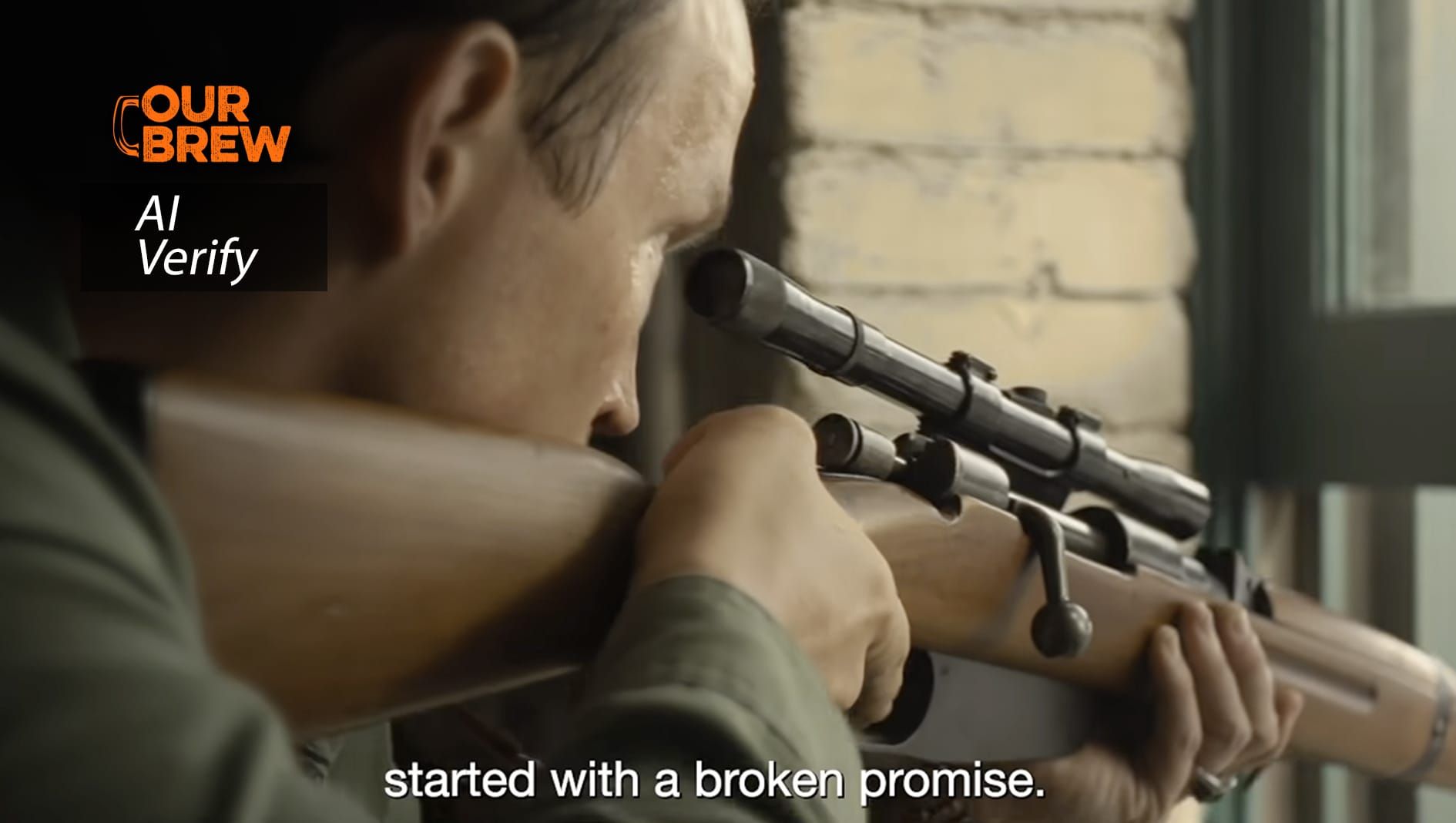

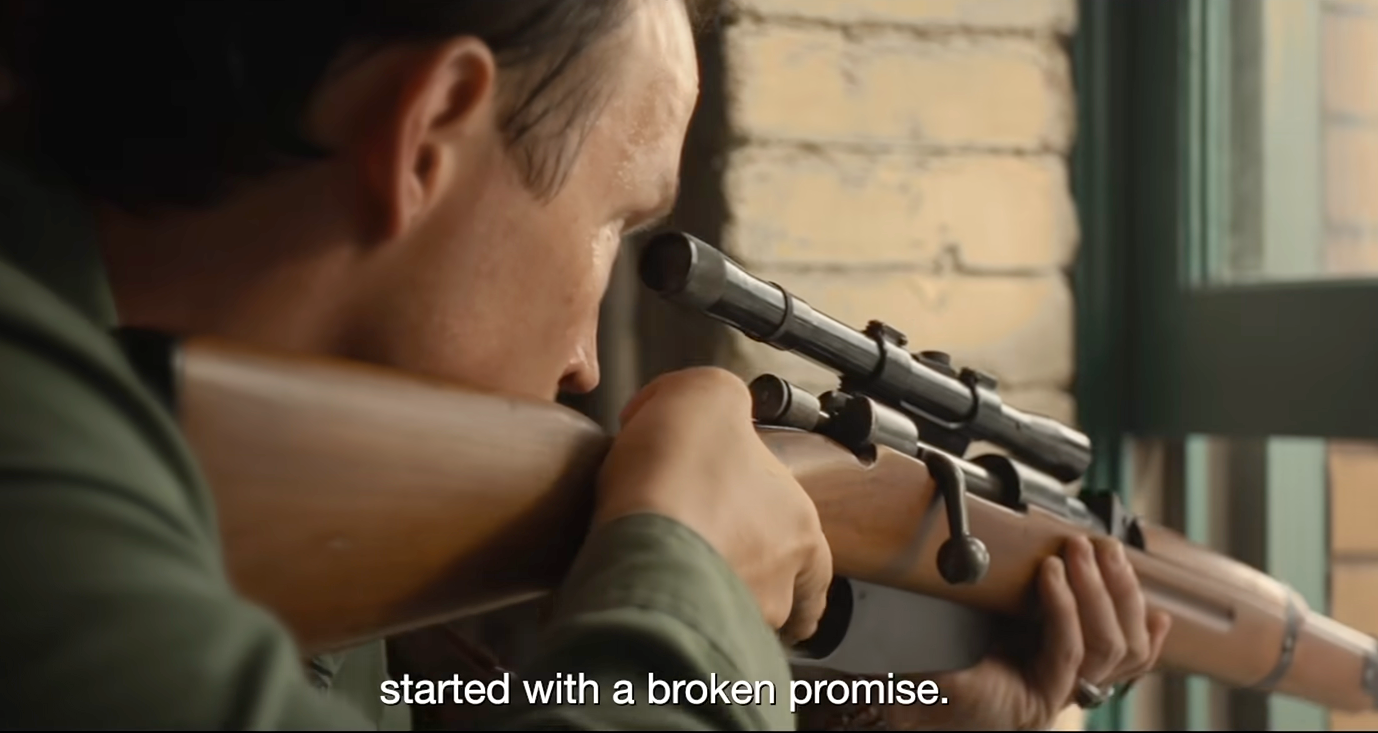
There is a film coming in November that proposes a solution to perhaps the most famous solved-but-not-quite-solved murder of modern history.
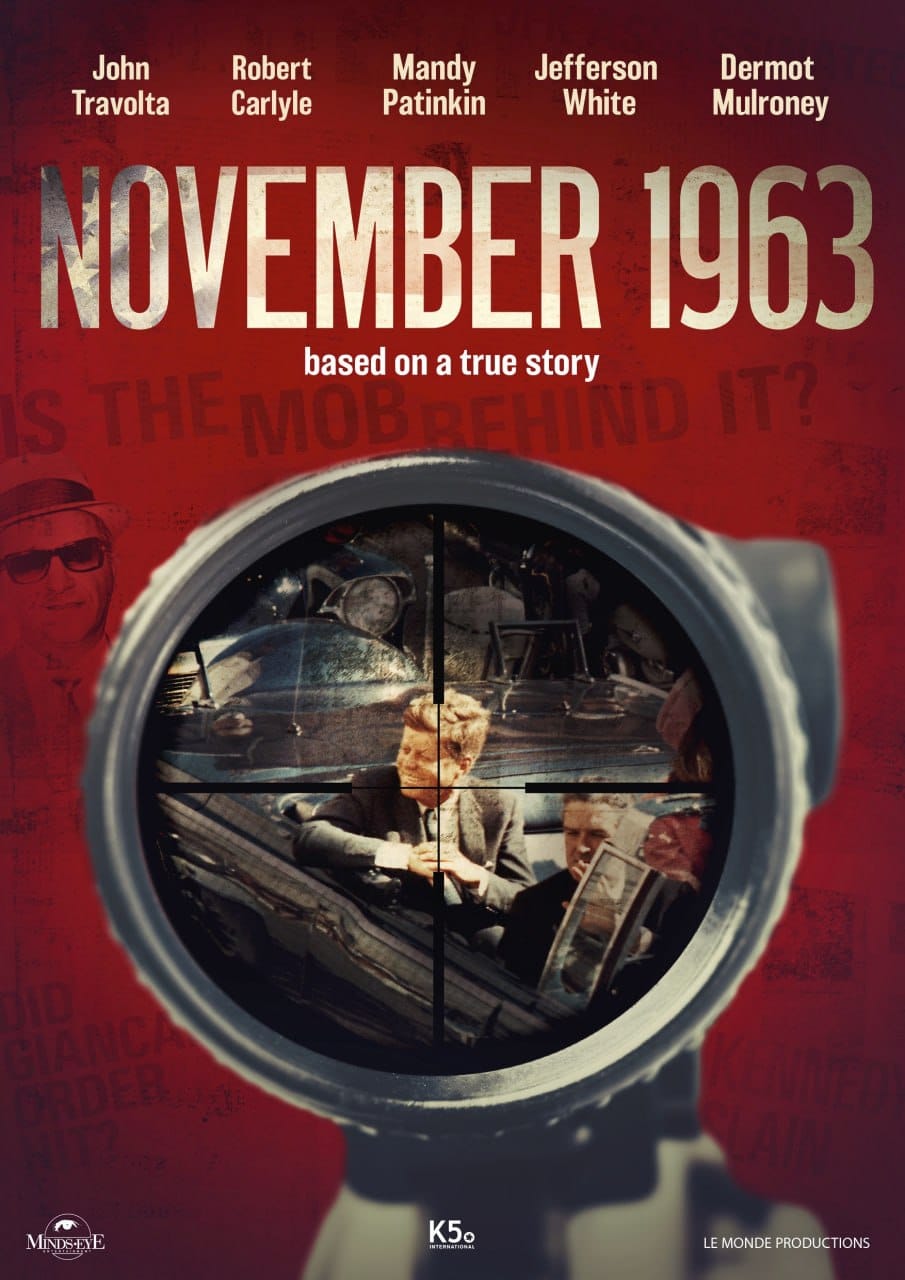
November 1963, directed by Roland Joffé, tells the assassination of President John F. Kennedy from the point of view of the Mafia. John Travolta plays Johnny Roselli, Robert Carlyle plays Jack Ruby, and the story puts Chicago crime boss Sam Giancana at the center of a plot that ultimately reaches Lee Harvey Oswald and Dealey Plaza.
The proposition is not new: the Mafia helped put Kennedy in the White House; the Kennedys subsequently turned on the Mafia; the mob retaliated by arranging his assassination. The film's writer and producer, Nicki Celozzi, is Giancana's grandnephew and says the story came down through his great-uncle Joseph "Pepe" Giancana, Sam's brother.
AI, please verify: Could it have happened?
The surprising answer is yes. That is quite different from saying it did.
THE PART THAT IS TRUE
The Mafia's presence in the Kennedy story is not something invented by conspiracy theorists. Sam Giancana and Johnny Roselli were major organized-crime figures. More remarkably, the CIA really did work with them in plots to assassinate Fidel Castro.
It sounds like something a screenwriter would invent. Congress eventually established that it happened. The CIA enlisted intermediary Robert Maheu, who brought in Roselli and Giancana; Florida mob boss Santo Trafficante also became involved.
Consider what that means. Before we get anywhere near Dallas, we already have the American intelligence establishment and organized crime collaborating on political assassination.
There was motive, too. Robert Kennedy's Justice Department was pursuing organized crime aggressively. To mobsters who believed they had helped the Kennedys politically, the administration could easily have looked like a spectacular betrayal.
And then there is Jack Ruby.
Ruby, a Dallas nightclub owner, walked into the basement of Dallas police headquarters on November 24, 1963, approached Lee Harvey Oswald and shot him dead on live television, two days after Kennedy was assassinated.
The Warren Commission found no evidence that Ruby killed Oswald as part of a conspiracy. But the later House Select Committee on Assassinations found that Ruby had considerably more underworld contacts than the original investigation had established. That does not prove that the Mafia sent him to silence Oswald. It does make the question less preposterous than it sounds.
OSWALD — OR OSWALD AND SOMEBODY ELSE?
The evidence that Lee Harvey Oswald fired at Kennedy is stronger than decades of conspiracy culture sometimes make it appear.
The Warren Commission concluded that Oswald fired the shots from the Texas School Book Depository. Fifteen years later, the House Select Committee investigated the assassination again and agreed that Oswald fired three shots at the presidential motorcade, two striking Kennedy, the last killing him.
This changes the most interesting question.
It need not be Oswald or conspiracy?
It can be Oswald—and who else?
Congress itself reopened that possibility. In 1979, the House committee concluded that Kennedy was "probably assassinated as a result of a conspiracy." But that famous conclusion needs an important qualification: it depended substantially on acoustic evidence interpreted as indicating another gunman. A National Research Council panel later reexamined that evidence and concluded that it did not support a second gunman.
As for the Mafia, the congressional committee found that organized crime as an institution did not assassinate Kennedy. But it could not exclude the possibility that individual organized-crime figures were involved. It examined Carlos Marcello and Santo Trafficante particularly closely and found motive, means and opportunity, but no evidence sufficient to establish their participation.
That remains an enormous distance from proof.
Which gives November 1963 its opening. The film takes historical facts and supplies the connections history has never established.
Its individual pieces are often real. What remains unproved is whether they belong to the same puzzle.
HOW CAN AMERICA NOT KNOW?
There is another question that bothers me more.
How can the most powerful country in the world fail to solve a murder committed in broad daylight, in front of hundreds of people?
In one sense, it didn't fail. Kennedy was shot at 12:30 in the afternoon. Oswald was arrested that day. His rifle was recovered. Both the Warren Commission and the later congressional investigation concluded that he fired at Kennedy.
America solved who shot Kennedy.
What it never settled beyond enduring doubt was whether anyone stood behind the man who did.
Then, forty-eight hours after Oswald's arrest, Jack Ruby shot him dead.
Imagine that happening in an ordinary murder case. The principal suspect is killed inside police headquarters before he can be tried, before his defense lawyers can challenge the evidence, before witnesses can be cross-examined, before subpoenas can expose what investigators may have missed.
Oswald never had a trial.
History got a commission report instead of a verdict.
THE INVESTIGATORS HAD SECRETS, TOO
There was another problem. The institutions investigating Kennedy's murder were themselves carrying secrets.
The CIA had not told the Warren Commission everything it knew, including the extraordinary fact that it had worked with Mafia figures on plots to kill Castro. The FBI had information about Oswald before the assassination. The Secret Service had just suffered the catastrophic failure of losing the president it was supposed to protect.
The later House committee did not conclude that the CIA killed Kennedy or that the FBI covered up his murder. It concluded something less sensational but deeply consequential: the Warren Commission had not received all the relevant information, and the agencies had not adequately investigated the possibility of conspiracy.
Institutional secrecy does not prove conspiracy.
It does, however, make certainty much harder.
Even the hundreds of eyewitnesses do not solve the problem. People in Dealey Plaza remembered different numbers of shots and different directions from which they seemed to come. Sudden violence does not turn hundreds of witnesses into hundreds of cameras. It produces hundreds of human memories of a few seconds of chaos.
SO, AI, DID THE MAFIA KILL KENNEDY?
There is no evidence strong enough to say yes.
There is substantial evidence that Oswald shot Kennedy. There is no persuasive evidence that Oswald was merely an innocent "patsy." There is also no conclusive evidence connecting Giancana, Roselli, Ruby and Oswald in a single Mafia assassination operation.
But November 1963 is not constructing its story entirely from fantasy. The CIA really did work with the Mafia on assassination plots. Giancana and Roselli really were involved. Robert Kennedy really did pursue organized crime. Ruby really did have underworld associations. And Ruby really did kill Oswald before Oswald could ever stand trial.
So my verdict on the film's proposition is:
Plausible. Not proven.
And perhaps we have spent sixty-three years asking the wrong question.
Who shot Kennedy?
There is strong evidence for an answer: Lee Harvey Oswald.
The question America has never satisfactorily answered is more unsettling:
Was there anyone behind the man who shot Kennedy?
America came remarkably close to answering the first question within hours.
Jack Ruby may have helped make the second unanswerable forever.
If you liked what you just read and want more of Our Brew, subscribe to get notified. Just enter your email below.
Related Posts
AI, Please Verify: "Dark Chocolate is Repair Nutrition — Good for You."
Jul 30, 2026
AI, Please Verify: What’s the Truth behind Hydrogen Water? Health Breakthrough?
Apr 11, 2026
AI, Please Verify: What’s the Truth behind “Coughing During a Heart Attack”? Can It Save You?
Mar 25, 2026