

By Vincent R. Pozon
“Lawyers follow laws. I make them.”
That is the sharpest answer to the lawyer who sneers at the non-lawyer legislator. The work of a lawyer is to operate within the law. The work of a legislator is to examine it, test it, amend it, abolish it, and, when necessary, imagine something better.
Former representative Teddy Casiño said it with more warmth. A few years after declining his father’s ambition for him to become a lawyer, he told him: “Hayaan mo na dad, hindi nga ako naging lawyer, naging lawmaker naman ako.”
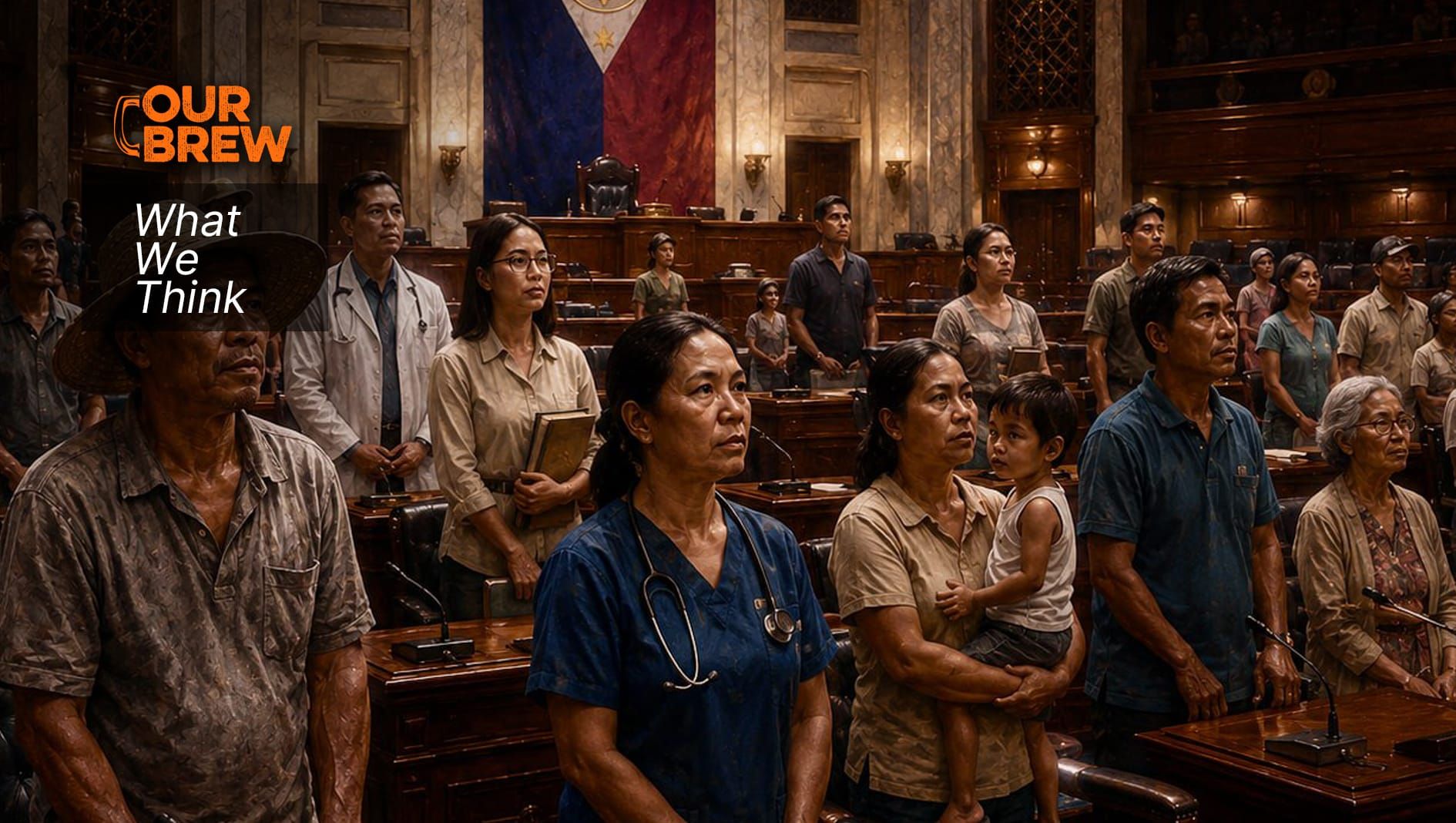
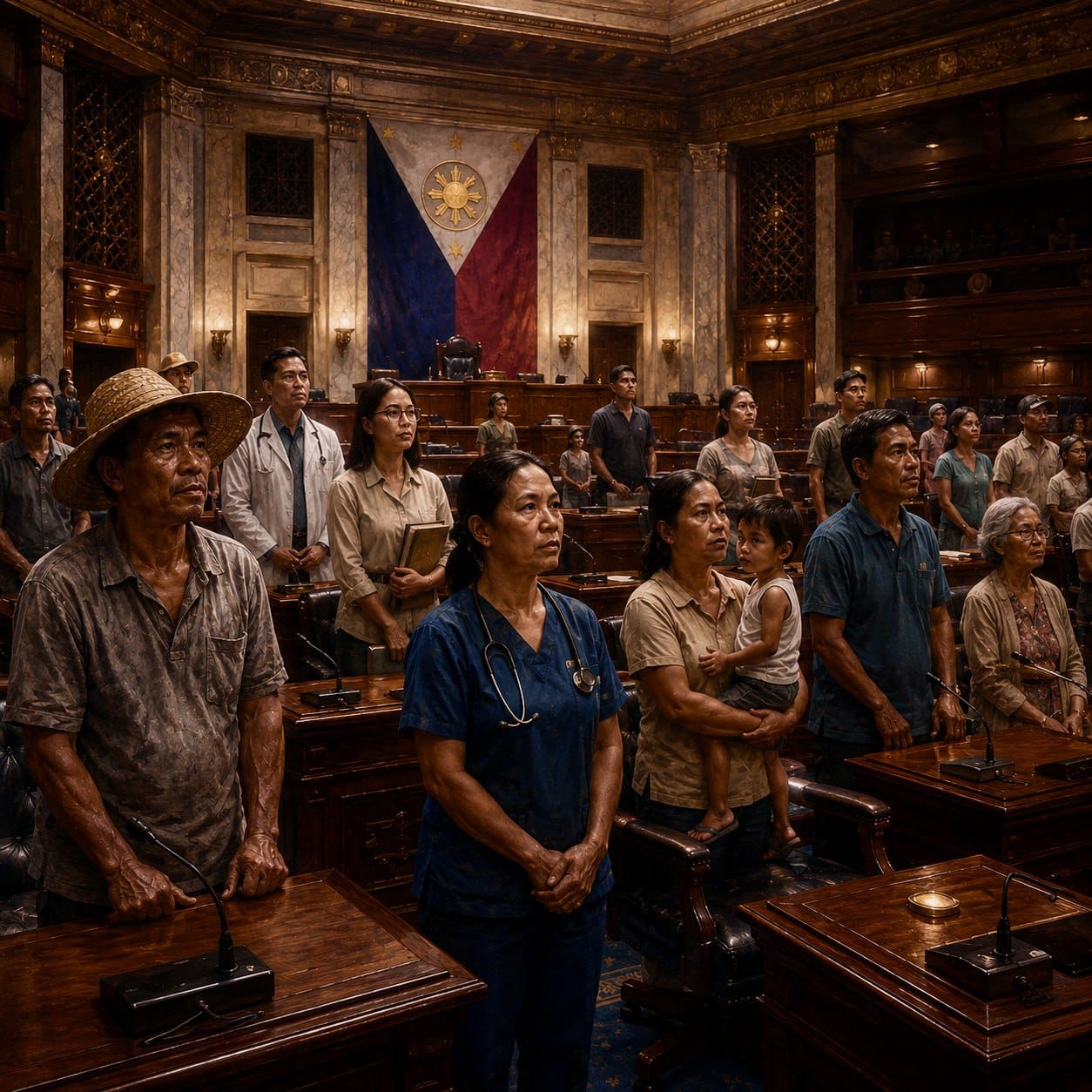
Laws are not written for lawyers. They are written for people who ride buses, miss meals, borrow money, wait in hospitals, fear eviction, endure bureaucracy, and meet government not as theory but as delay, threat, fee, long queue. The non-lawyer may bring what legislation often needs more urgently: lived knowledge, memory of ordinary hardship, instinct for consequence, and an ear for how laws behave once they leave the session hall.

There are rooms where a legal background is of obvious value. A courtroom, certainly. A constitutional argument, often. A technical committee, perhaps. But a legislature is not a chamber of legal technicians. It is a room where the country is supposed to think aloud about itself. What is working? What has failed? What must be repaired, restrained, expanded, abolished, or made new? In that room, the lawyer’s training can illuminate.
It can also narrow.
Designed into the lawyer is a reflex of caution: what is permitted, what is prohibited, what precedent allows, what old jurisprudence says. That reflex protects society from recklessness. But it may also protect the status quo from imagination. It can mistake the existence of a wall for proof that the wall should remain. It can treat the inherited as biblical and not to be questioned.


Some lawyers can be more fluent in why something cannot be done than in why something must be tried.
Marketing, a field I have worked in for more than fifty years, has its own laws, and anyone who obeys them blindly will never create the aberrant, the striking, the campaign that breaks perception. A mind commanded to comply may struggle to invent. A mind trained to navigate the maze may forget to ask whether the maze should exist.
Worse, it may learn only how to skirt the rules.

Legislatures exist to represent the full range of society. It is not a guild.
The lawyer-senator who sneers at a non-lawyer colleague confuses two different jobs: the draftsman and the representative. Good legislatures hire lawyers as staff precisely so elected members can focus on the harder, less teachable work of judgment.
Florin Hilbay, former Solicitor General, the man who ranked first in the 1999 bar examinations, has said that a non-lawyer not only can but should lead the impeachment trial; applying logic, practical reason, curiosity, and skepticism. His reasoning cuts to the bone: impeachment is not a judicial proceeding and should not be conducted as though it were an affair among lawyers. The Constitution envisions it as a public and political inquiry. His conclusion: "We must disabuse ourselves from the notion that lawyers are better than non-lawyers at arriving at just and reasonable conclusions."
A lawyer saying that. The one who topped the bar.
A law degree is a valuable instrument. It is not the music, it is not the whole performance. I remember Roman Cruz, Jr., then president of Philippine Airlines, being asked why he did not carry a phone. His answer was perfect:
"Yung driver ko, mayroon."
Sen. Risa Hontiveros has no legal background? Look at the laws. Sometimes the best answer to condescension is a record.
If you liked what you just read and want more of Our Brew, subscribe to get notified. Just enter your email below.
Related Posts
When Stupidity Becomes Virtue
Sep 01, 2026
Elections 2028: Shady Characters Have Hijacked the Flood Control Issue
Aug 18, 2026
Asymmetrical Warfare: Who’s Still Afraid of the Big, Bad Wolf?
Aug 10, 2026