

By Vincent R. Pozon
I was about to unpin my post about my wife's death when an old friend of hers sent me a message asking about her. The question startled me. It has been half a year since; I had assumed that the news had already traveled. She was the world to me. After forty-seven years, our worlds had coalesced. So when mine collapsed, I half-expected everybody to have heard.
But social media is not the world.
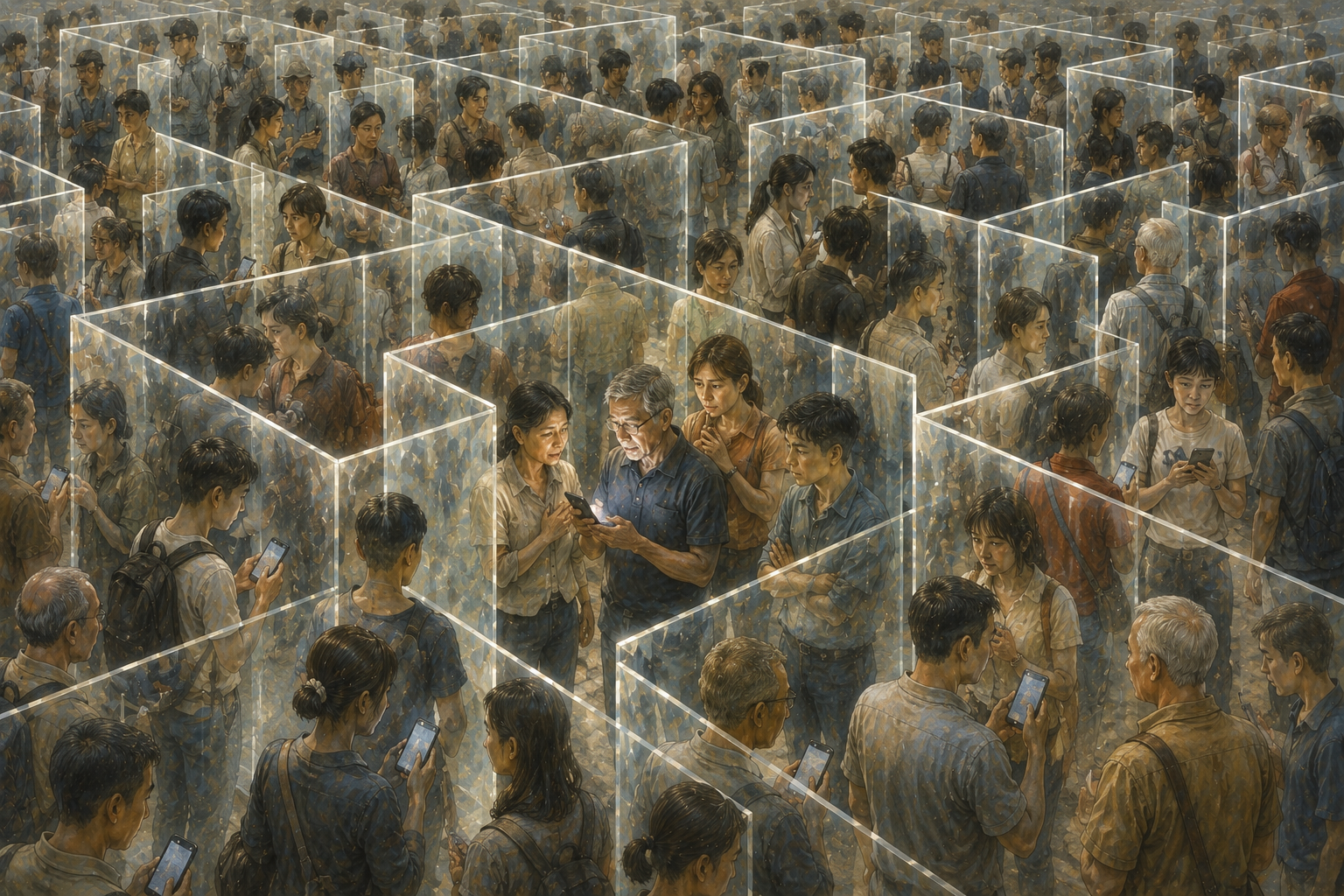
We speak of "posting" as though the act itself were enough, as though we had placed a notice on the town wall, rung the church bell, sent word through the village. But a post is not a bell that rings for everyone. It is released into a system of cubicles. Some manage to reach intended recipients. Some may arrive after the urgency has gone cold.
I do not exempt myself from fault. I made no special effort to contact everyone who should have been told. In my grief, this communicator was no communicator. My son posted first, breaking the news before I found my words. Others followed, informing clients and partners, telling them about the wake. If they had not, I might have made a mess of the simplest of tasks.
We have come to mistake social media for a system of notification. It is not. It is a system of distribution, and distribution is not the same as certainty.
The New Neighborhood
This is the new neighborhood. It is not made of streets but of feeds. It is not arranged by distance but by affinity, age, behavior, appetite, anger, and whatever the platform thinks will keep people browsing, scrolling, watching. Someone may be right beside us and still not be living in our world, still not receive news about us.
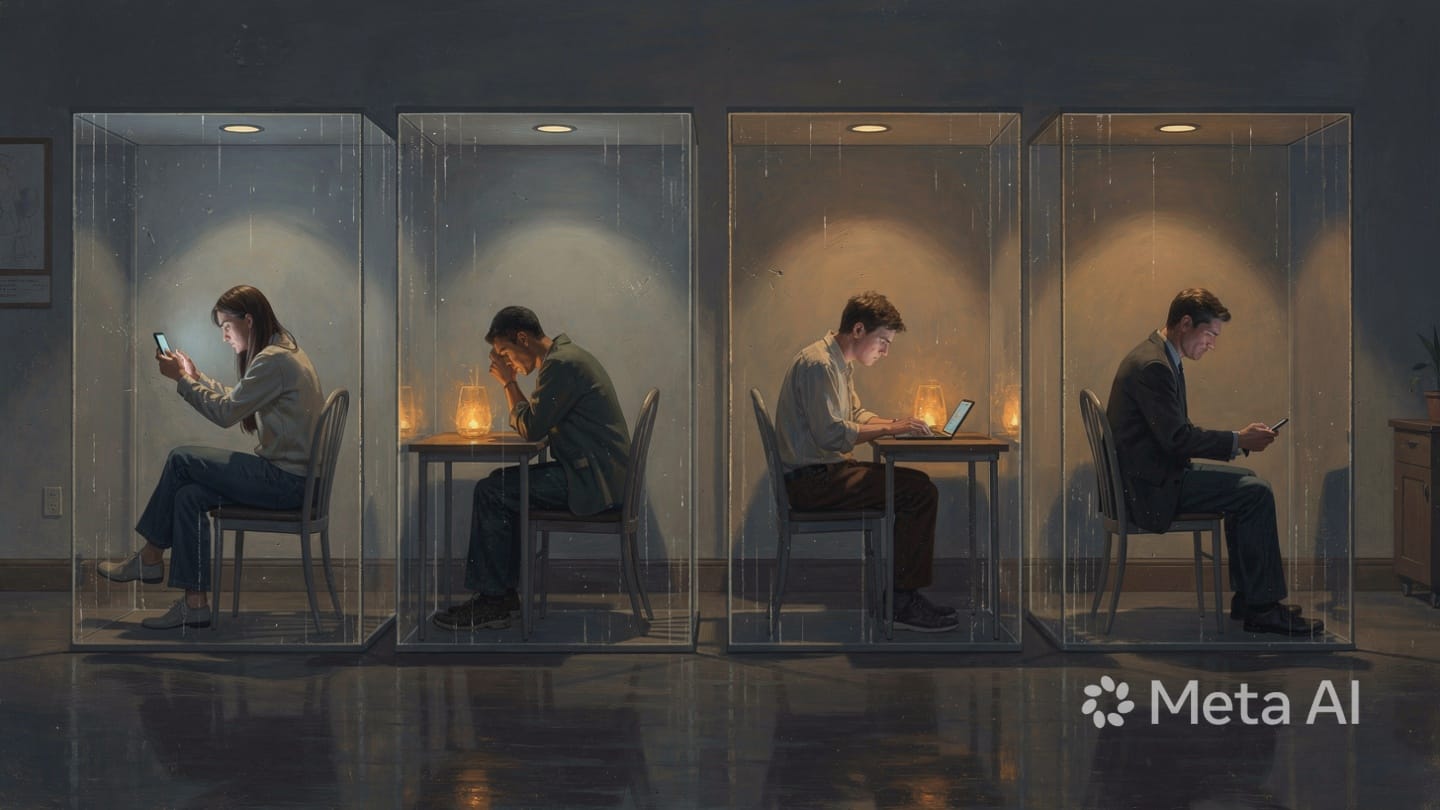
We like to say we live in bubbles. But we do not live in one. We live in several at once, a political bubble, a generational one, a cultural one, perhaps a cluster of high school classmates, another of former colleagues. Each is its own neighborhood, with its own residents and its own feed. News posted in one bubble does not automatically reach the others. Grief shared in one room does not travel down the hall. The person who knew you in one chapter of your life may be completely walled off from the person you have become.
I recently came across a young YouTube creator from the United Kingdom preparing to do content on Lea Salonga. He had nearly 700,000 subscribers and admitted he did not know her. He consulted Wikipedia; he says he was unsure how to pronounce her name.
His subject is a performer who had won the Laurence Olivier Award of his country, a voice known across continents. And yet, to him, she was not a given. She was new information.
That is what the bubbles do. They prevent knowledge from passing from one generation to the next. What is legendary in one room may be invisible in another.
"Magparamdam, or else"
This also explains the recurring irritation of people who complain about quiet followers. They post a warning: "interact with me, like or leave a word, or I will unfriend you". They imagine silence as indifference. But it may be less personal than that. Their pages and posts are really not ignored. The algorithm places their friends and followers in other dimensions. Many may not have "liked" their posts simply because they do not see them.
What the Feed Buries
It is not only that others miss what we post. We miss what others post.
Many times you see something run down your feed a little too often: a friend's post about a reunion, ads for gadgets, laptop stands, and jeans. And then you miss an obituary.
He was a former boss, a god in the industry, a man with legacies in advertising, in movie-making, in music. I learned of Gryk Ortaleza's passing three months too late to attend his wake.
The algorithm had been busy showing me other things.
I have taken to hiding ads I see too often, unliking pages that no longer interest me, unfollowing groups, unfriending even, so I do not miss what matters: a friend's illness, a cousin's wedding or firstborn, a nephew's first job; so the news of people I know or love can still find me; so I will know, too, when the gods leave.
The Superpower of Broadcasting
Advertising people have long weighed broadcasting against narrowcasting. Broadcasting is powerful, but it reaches too many people, including those who do not care, cannot buy, will never respond. Narrowcasting promises efficiency. Why speak to everyone when you need speak only to the likely buyer, the interested voter, the segment that matters?
But the logic has now gone further. We are not merely narrowcasting to women aged 25 to 44 in a certain region, or to senior men who like motorcycles. We may now be narrowcasting to slivers within slivers, to temporary behavioral clusters, to people who paused on a video for three seconds.
The target has become so refined that even friendship, school, or blood relation is no longer a guarantee of delivery.
The strength of broadcasting is shared visibility. It gives people the same thing to know. A nation watches the same broadcast. A city hears the same announcement. No one is left out because an algorithm decided the news was not relevant to them.
Social media has no such obligation. It is indifferent to what matters to the general public. It delivers what it calculates will keep you on the platform, not what you need to know, not what your friends need to hear.
I know, being in advertising, that a post in social media is a narrowcast, not a broadcast: the feed decides who sees it, an algorithm sorts it into some rooms and not others. And yet I was the one who fell into believing that my own posts, and those of my son, about my wife's passing would function like the old kind of announcement, the city hearing the same bell, our coalition of friends and loved ones knowing.
And so the post announcing her passing? It stays pinned at the top of my page for now.

Vincent R. Pozon
Koyang has been in advertising for more than half a century, in various agencies, multinational and local. He is known for aberrant strategic successes (e.g., Clusivol’s ‘Bawal Magkasakit’, Promil’s ‘The Gifted Child’, RiteMED’s ‘May RiteMED ba nito?', VP Binay's 'Ganito Kami sa Makati', JV Ejercito's 'The Good One', Akbayan's 'Pag Mahal Mo, Akbayan Mo')). He is chairman of Estima, an ad agency dedicated to helping local industrialists, causes and candidates.
If you liked what you just read and want more of Our Brew, subscribe to get notified. Just enter your email below.
Related Posts
Laughter as an Antidote to Despair
Feb 02, 2026
AI Didn’t Just Miss the Fake — It Defended It. That’s the Real Problem
Dec 03, 2025
What We Get Wrong About This Strange Thing We Call Advertising
Jul 02, 2025