

By Vincent R. Pozon
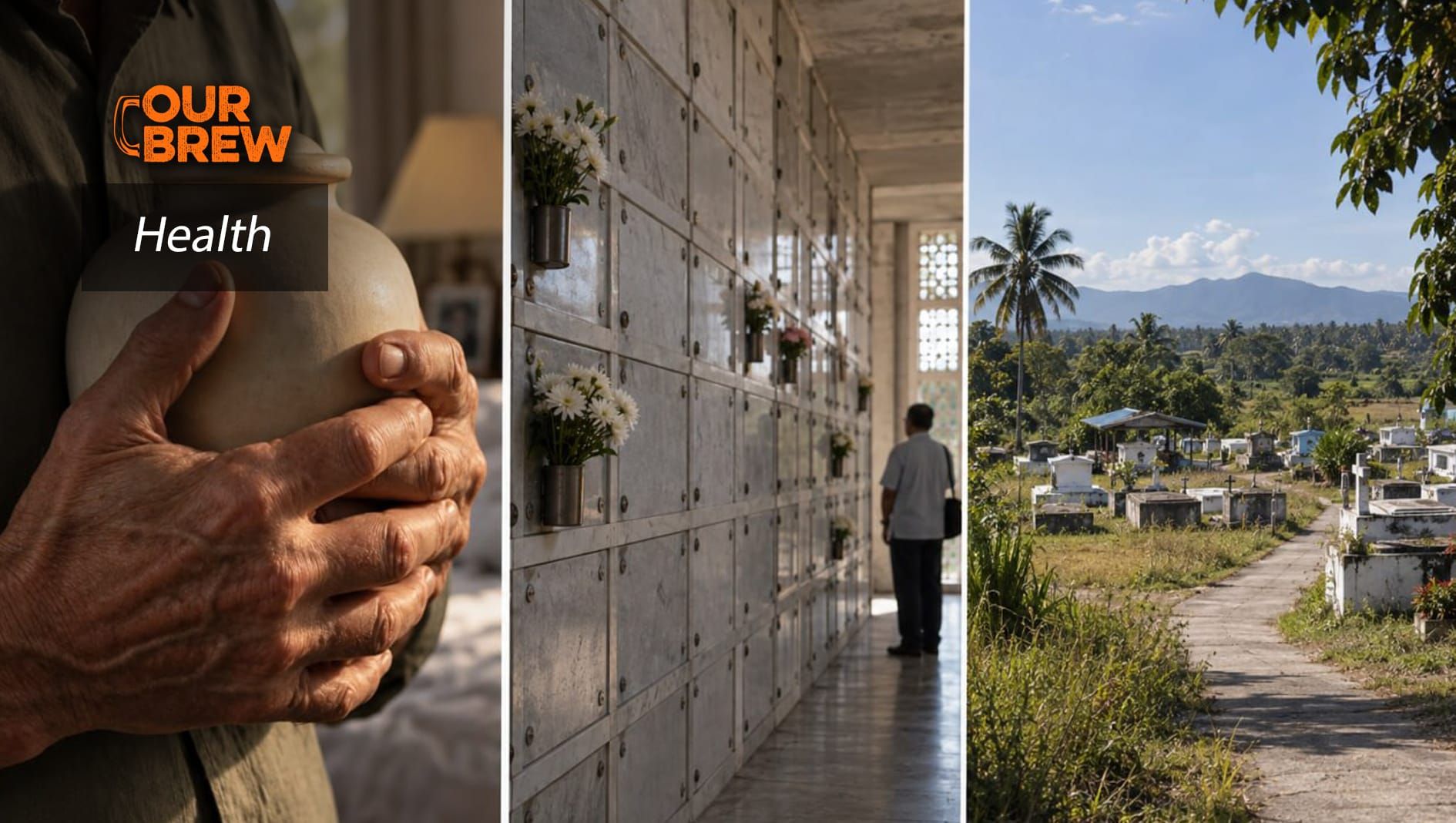
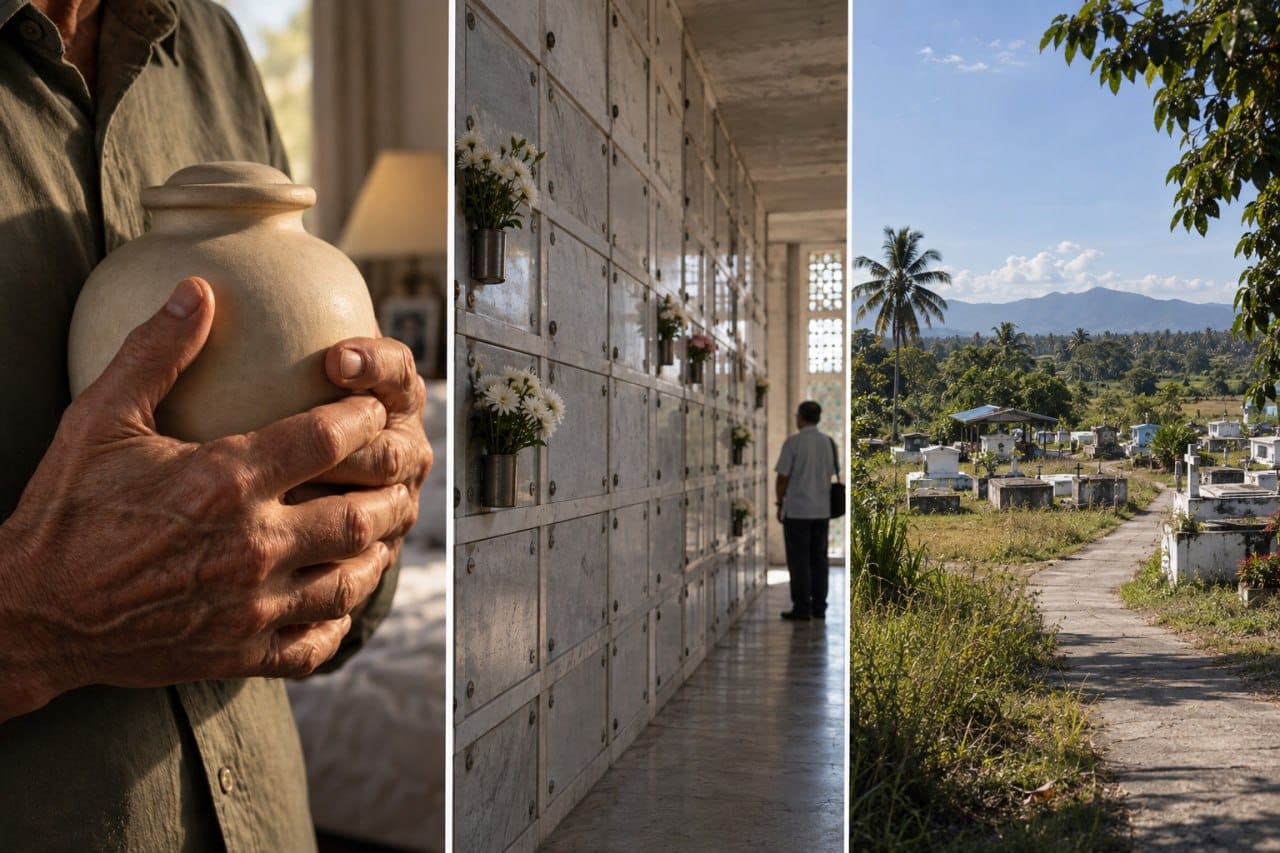
He noticed before I did. The driver, waiting as I carried the urn of Venise's ashes to the car, said I was holding it with the same care I had always taken with her when I accompanied her. I know they are but ashes, as I am unbound by Catholic beliefs or customs. But my arms did not get the memo: I was holding the marble urn as carefully as though what it contained could still be hurt.
Only later did I understand what the gesture was telling me. My body had already answered a question I had not thought to ask: how near did I need her to be? Grief, I was discovering, is not only a feeling. It becomes an arrangement, a question of distance, and how often you agree to close it.
The distance we build
In a garden in Ōtsuchi, Japan, there is a telephone booth with a black rotary phone inside, connected to nothing. People drive to it, sometimes for hours, to speak to the dead. It has been used thousands of times. I was skeptical when I first heard of it. Nothing and nobody is on the other end. No music, no voice. Then I understood: that is exactly the detail that makes it work.
Because no one answers, no one has to be managed. There is no listener to protect from the weight of what you are feeling. A working line would make it a phone call, something with a person on the other end whose reaction you'd have to account for. A dead one makes it a confession. That absence is not a flaw in the design. It may be the design.
But the wind phone asks something else of a person first: distance. You leave the house and drive, before you are permitted to speak. You step out of an ordinary day, and after the call, you step back in. The booth door closing behind you on the way out may do as much work as the one that opened on the way in.
The dead we visit
A columbarium wall runs on the same principle, distance built in on purpose. The dead go into a numbered slot, visited when the calendar says so: a birthday, a death anniversary, All Souls' Day.
Farther still are the dead buried in cemeteries back in the province, where a visit may require even days on the road. Once there, the visiting can become festive. Families bring folding chairs, food, and spend an afternoon at the grave the way they would at a park. I can understand that: it is grief turned into an occasion with other people in it; the distance is kept, but softened by company and ritual.
I could not, before any of this, understand the concept of a columbarium. It seemed an expensive way to keep someone far enough so visiting required planning. I understand it differently now. It isn't wrong. It is simply not how I am built. Distance was never going to be the answer my body wanted, and the picnic version of it, warm as it is, still asks a person to leave home to find the dead.
The dead who stay
I am not alone in this. My cousin keeps both her parents on an altar in her own home, in the room she passes every day. In the United States, roughly one household in four has the cremated remains of a loved one at home (I would not imply that the same ratio applies to the Philippines; I cannot find a comparable Philippine national survey). Philippine health rules do expressly allow relatives to bring cremated remains home in a proper cremains container.
Venise is in my bedroom. The urn hasn't moved, not from ceremony, simply because I have given it no thought, and I like that about it. The urn at home asks nothing of me. No drive, no calendar, no folding chairs.
She is not an occasion I observe. She is a fact of the room, the way she always was.
This is the real difference between an appointment and a housemate. A scheduled ritual, the wind phone, the wall, the cemetery afternoon, protects the rest of the day from grief. It says, this hour is for missing you, and the other hours can be for something else. What I have instead offers no such protection. It is less an avoidance of ritual than a refusal to treat her as an occasion.
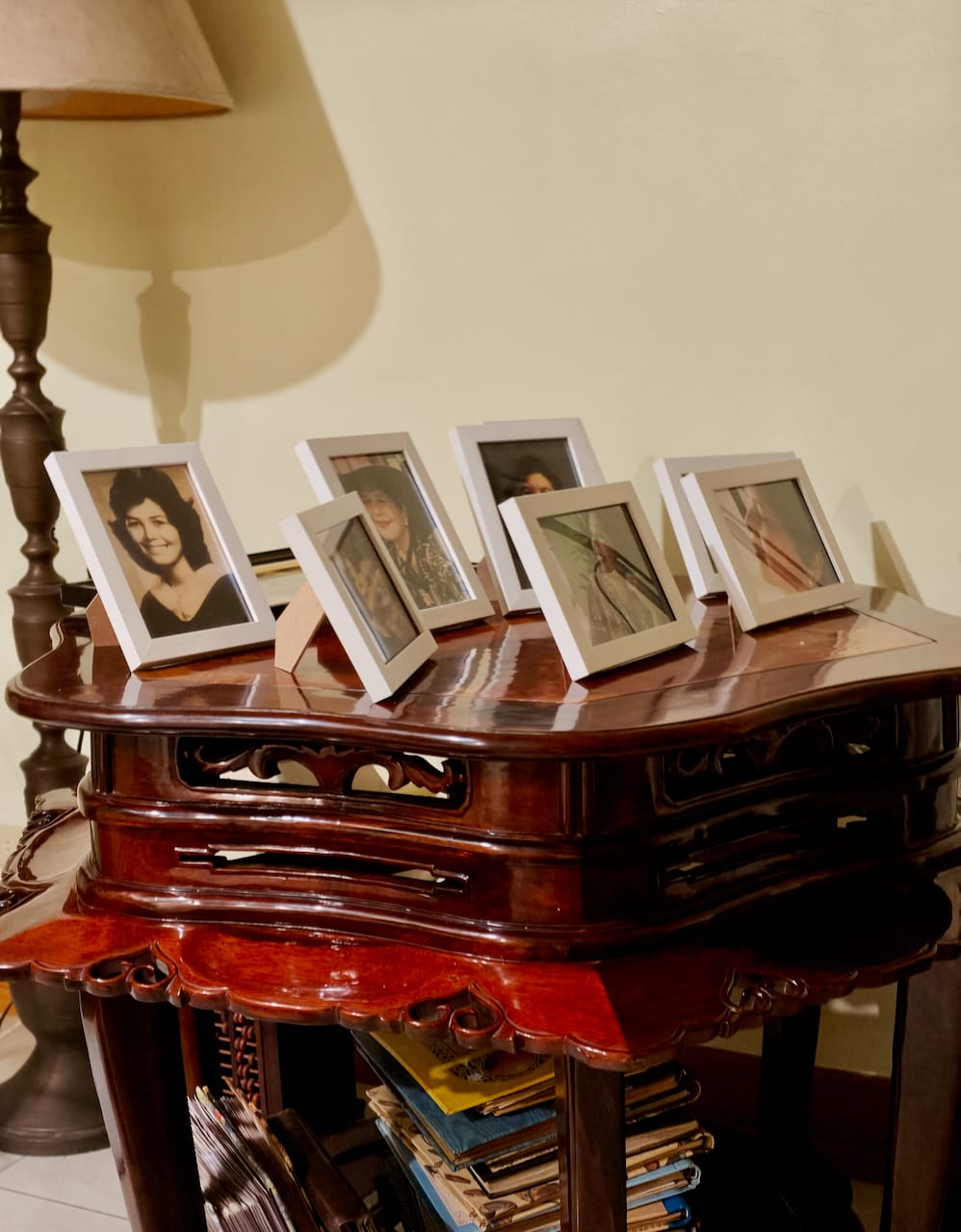
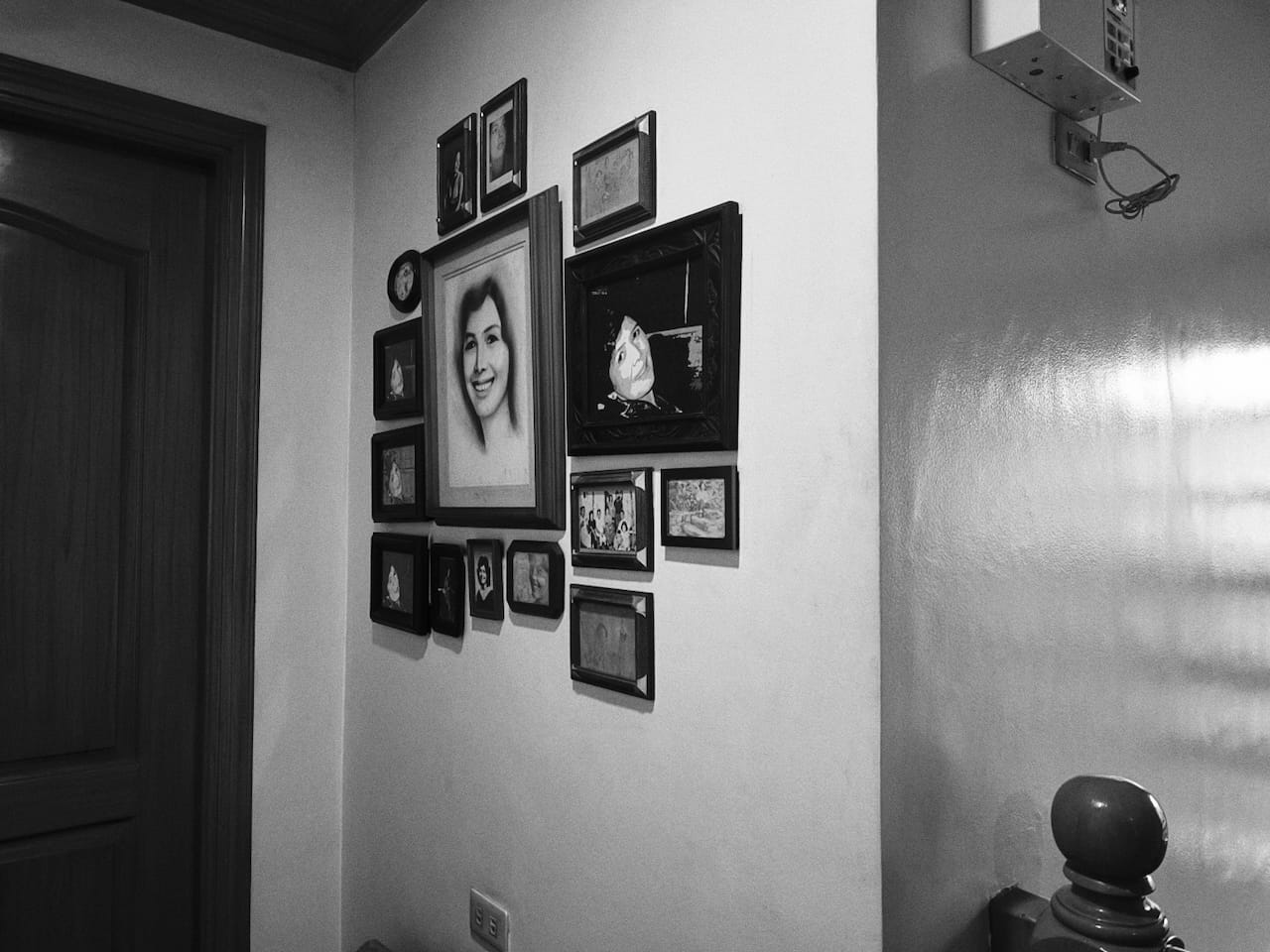
THE HOUSE HAS ALWAYS BEEN FULL of pictures and sketches of her, more now after she passed. A grief counselor advised me to gather them in one place, so I would know where to expect her and not be ambushed. I understand the wisdom of it. I have yet to obey.
Someone advised me once to gather her photographs in one place, and to make an altar of sorts, so her memory couldn't ambush me elsewhere in the house. I understood the wisdom of it immediately. I have not done it. Everything, at the moment, is up in the air, and I do not treat the not deciding as a failure to grieve correctly.
I do not think any of these is the healthier way. A person who drives hours to speak into a disconnected phone or to a piece of marble on the grass, or to a name etched on the wall is not more disciplined than a man with an urn in his home, in his bedroom even. Each is simply an answer to the same unbearable question, arrived at by people built differently:
How far do you keep your dead? How often do you let them in?
There is no correct answer. My hands, it seems, have already answered. They want her near enough to hold.
If you liked what you just read and want more of Our Brew, subscribe to get notified. Just enter your email below.
Related Posts
Fibermaxxing? Your Microbes (and Your Health) Say Thanks.
Sep 16, 2026
They Call It Stupid Hot for a Reason: Heat Muddles Animal Brains
Jun 03, 2026
What Addiction Does to the Brain
May 19, 2026