

By Vincent R. Pozon
Understanding the popularity
I am an armchair sportsman. I have been staying up nights to watch tennis since the days of Borg the Iceman, explosive Nastase, the relentless Lendl.
But I do not watch Alex Eala play until I know she has won.
Call it self-preservation. Or avoidance of unnecessary stress. I suspect I am not alone in choosing not to watch. Others suffer in the opposite direction: they cannot look away.
Across this country, people who have never held a tennis racket sit before their screens with their chests tightening, their prayers running just beneath their breath, watching a young woman from the Philippines stand across the net from the best players in the world. Many who watch say that even her victories are difficult to witness. Every match, won or lost, is a health risk.
That is not fandom. That is love.
We celebrated Hidilyn Diaz, Paeng Nepomuceno, Carlos Yulo — Olympic gold, world titles, genuine greatness. But not quite like this. Not with people traveling far to stadiums, paying for expensive and otherwise empty seats, staying up through the night for a sport they barely know.
The question worth asking is: what exactly does she cause in Filipino hearts?
Eala is now No. 18 in the world. She is 21. She has won her first WTA Tour singles title — and not a small one, but the WTA 500 in Washington, where she went through Leylah Fernandez, Elina Svitolina, Naomi Osaka and Jessica Pegula. At Wimbledon, she beat defending champion Iga Świątek and became the first Filipino to reach the second week of a Grand Slam. At the US Open, seeded 17th, she reached the third round and lost to Iva Jovic 7-5, 3-6, 7-5, the kind of match that leaves no room for embarrassment in defeat. She briefly climbed to No. 16 in the live rankings during the tournament. The WTA lists her 2026 record at 38 wins against 20 losses.
And yet she is still unfinished. Those who know tennis can see where her game can grow, particularly the serve. She remains an elite player in formation — already dangerous enough to beat the best, still young enough that one can imagine what she might become.
But even that does not explain the affection.
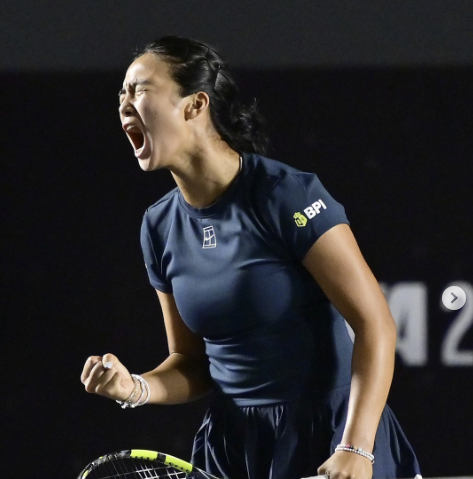
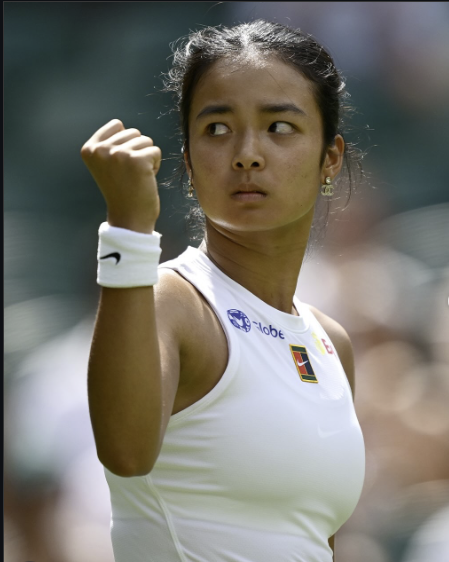
From Alex Eala Instagram account
There is also the person.
We have come to love what seems to be her basic goodness. In Eala there appears to be an old-fashioned sense of what is proper, an understanding of what is due to other people. Respect the opponent. Thank the crowd. Credit the team. Honor the family. Do the work. Do not make yourself larger than the occasion.
There is intelligence there, too, and depth. She listens to questions before answering them. She does not seem hurried to produce the clever line. During the rain interruptions in Washington, with the first WTA title of her life hanging unfinished on the other side of the weather, she passed some of the time reading Wuthering Heights. A 21-year-old athlete waiting for the biggest match of her life to resume, and somewhere inside the stadium, she reads a classic.
And then there is the work ethic. Years before she became famous enough to fill stadiums with Filipino flags, the work was already being done far from home, day after day, at the Rafa Nadal Academy. She has spoken of simply continuing to work every day, of staying hungry, of being kept grounded by the people around her.
We approve of her
And perhaps that is an important part of the affection. We do not merely want her to win. We like the person who wins — and, just as importantly, the person who loses. There is something almost parental in the pride: the feeling that here is a young Filipino sent out into the world who knows how to carry herself in it. She can fight ferociously for a point and, when the point is over, return to being this courteous young woman with a ready smile.
The people do not watch only the athlete. The people watch her spirit.
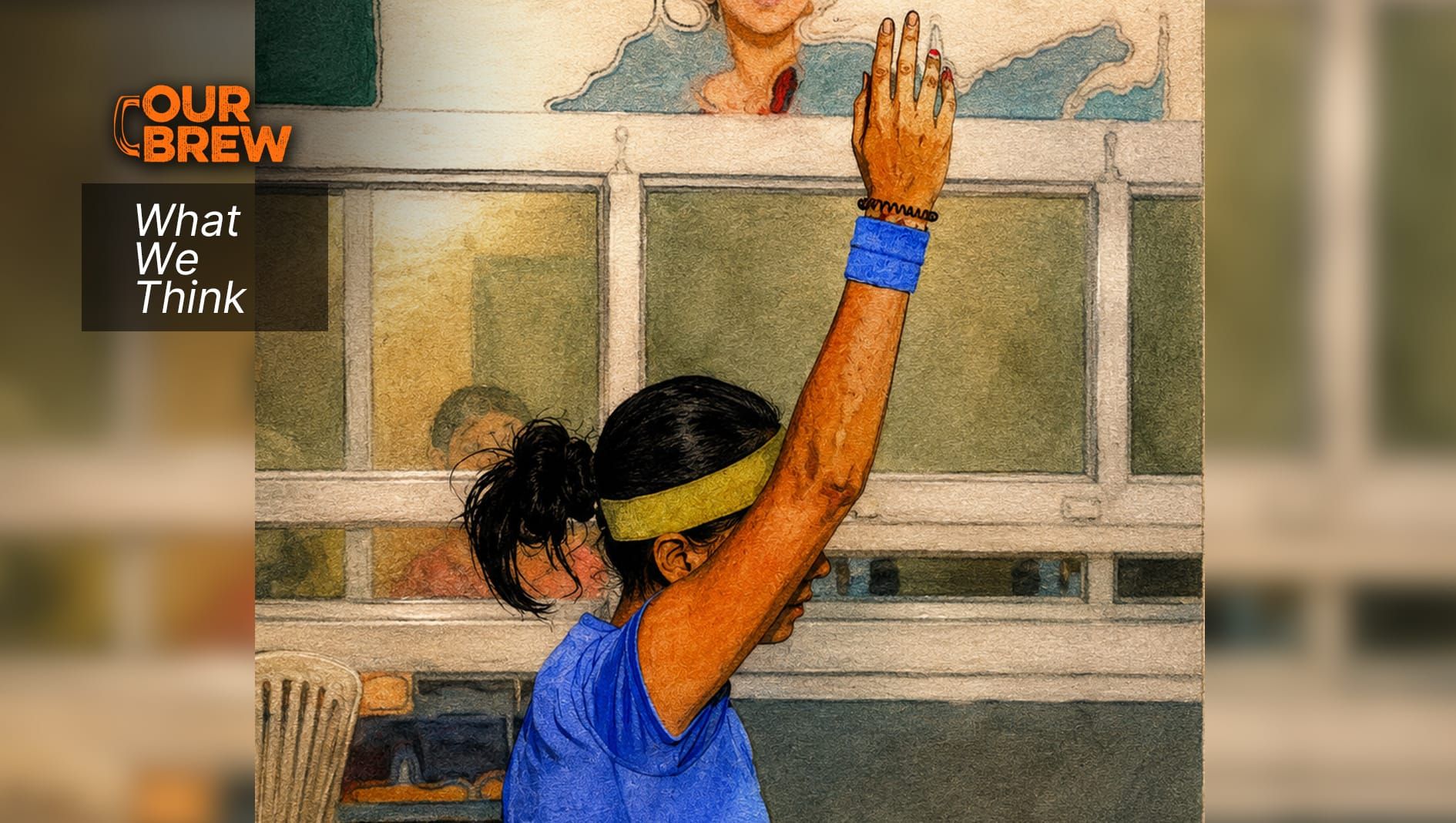
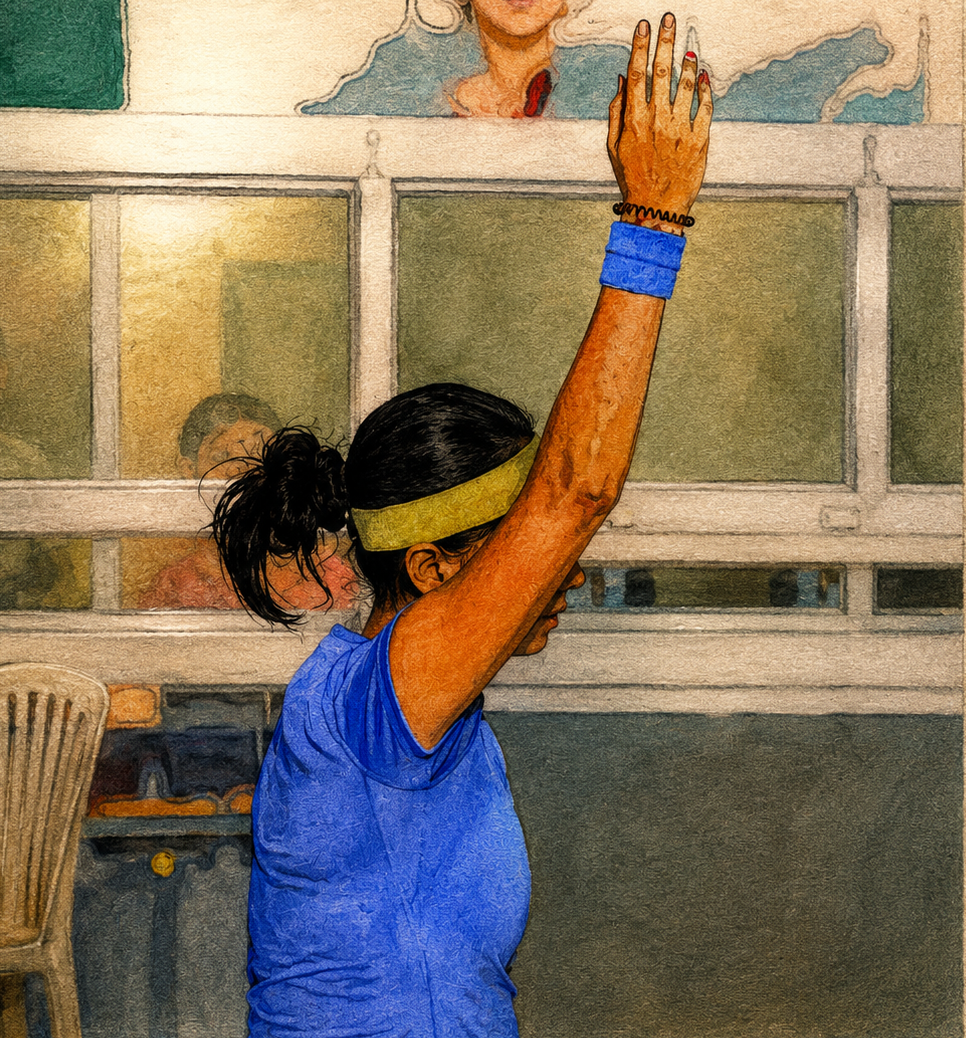
In the match against Magda Linette, after saving a difficult point, she raised her hand — not a fist thrust at the sky, not toward the crowd. A raised hand. A hmph.
In that gesture lives something this country feels about her. Eala is the hmph of the Filipino — of a people who lived under conquering nations for centuries, and under the more difficult conqueror called poverty.
The struggle — the tight sets, the points dragged back from the edge, the losses absorbed with her chin still level, the tears after both victory and defeat — keeps her ours. Victory makes her a champion. It is the fighting that makes her Filipino.
She knows, because she cannot not know, that a country weeps when she loses. That her defeats are felt in the chests of Filipinos all over the world. She fights not just for herself, but increasingly under the enormous emotional claim of a people who have decided she belongs to them.
That is a great deal of weight for a 21-year-old to carry onto a tennis court. She carries it without complaint, with a smile, ever ready to sign another autograph.
Heartbreak is a feeling that is Filipino through and through. It lives in the love songs that are almost always about loss. It lives in the way this country votes — with full hope, knowing heartbreak is the likely return. It lives in the way we cheer loudest not at the moment of triumph, but at the moment someone refuses to quit.
EALA'S RAISED HAND: the hmph of a nation.
We love her in spite of the uncertainty of victory. Perhaps even partly because of it. There is something profoundly Filipino in reaching for something enormous, almost touching it, losing it, and reaching again.
Loss does not diminish her. She walks off after every match, win or loss, having extended herself fully, having reached for balls others would have let pass.
And we, watching, recognize ourselves. We have been Eala, in other courts, in other battles, at other times in our lives.
We are a poor country that desperately needs heroes. Not perfect heroes, but present ones. Heroes who show up. Who work. Who know how to behave when the world begins applauding them. Who remain recognizably good.
Heroes who raise their hand. Alex Eala raises hers, and a country of nearly 115 million exhales.

Vincent R. Pozon
Koyang has been in advertising for more than half a century, in various agencies, multinational and local. He is known for aberrant strategic successes (e.g., Clusivol’s ‘Bawal Magkasakit’, Promil’s ‘The Gifted Child’, RiteMED’s ‘May RiteMED ba nito?', VP Binay's 'Ganito Kami sa Makati', JV Ejercito's 'The Good One', Akbayan's 'Pag Mahal Mo, Akbayan Mo')). He is chairman of Estima, an ad agency dedicated to helping local industrialists, causes and candidates.
If you liked what you just read and want more of Our Brew, subscribe to get notified. Just enter your email below.
Related Posts
When Stupidity Becomes Virtue
Sep 01, 2026
Elections 2028: Shady Characters Have Hijacked the Flood Control Issue
Aug 18, 2026
Asymmetrical Warfare: Who’s Still Afraid of the Big, Bad Wolf?
Aug 10, 2026