

By Mariana Burgos
First of two parts
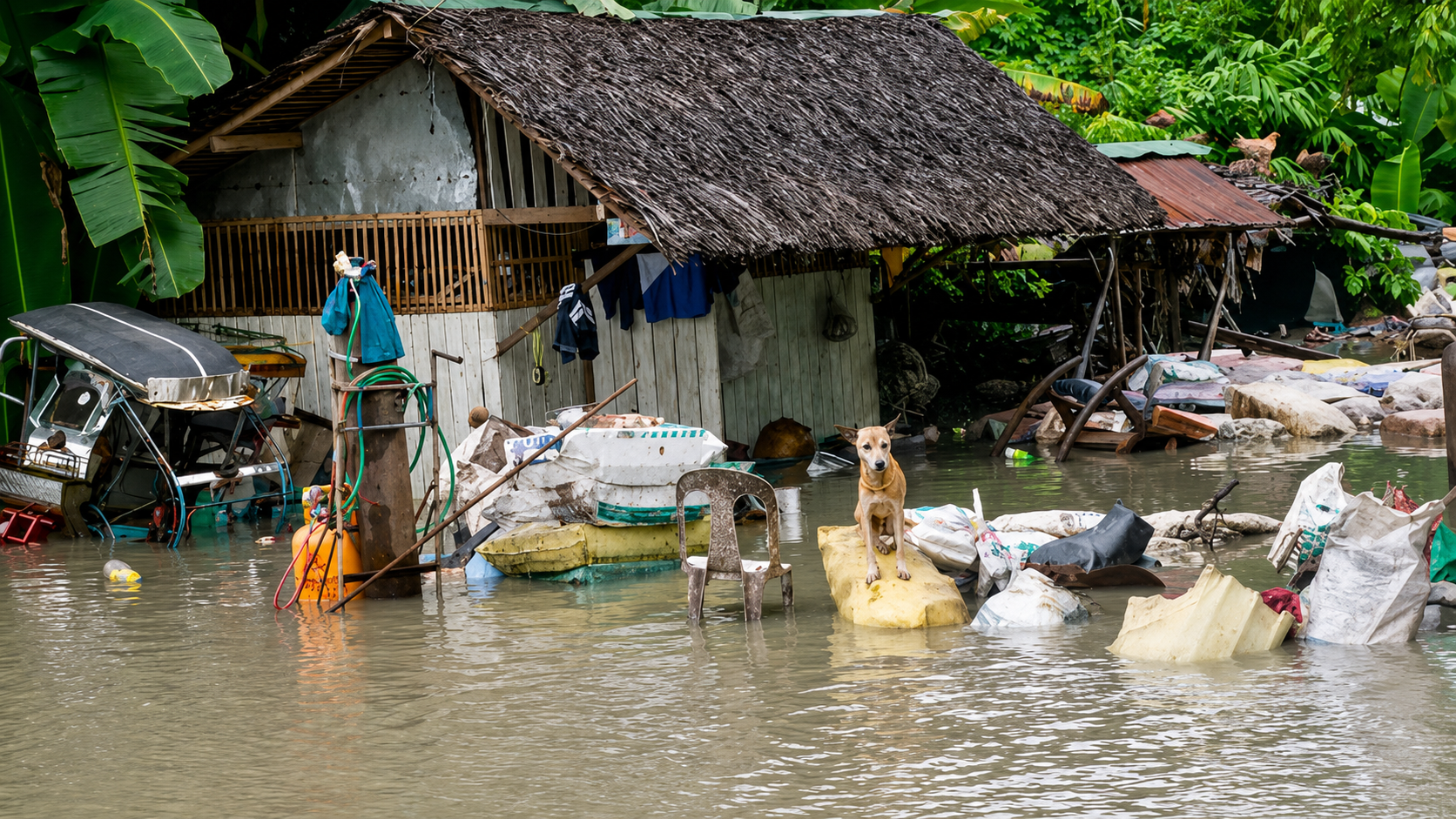
Disasters, unfortunately, are a part of life, and their impact extends far beyond the immediate physical damage. When faced with the necessity of relocation due to a natural disaster or other emergency, the well-being of our pets, particularly dogs, becomes a paramount concern.
The Emotional Toll of Displacement
The abrupt disruption of a dog’s familiar surroundings, scents, and daily rituals can trigger significant emotional distress. As highlighted in the article, “PETA Urges Pet Owners to Include Animals in Disaster Plans Amid Typhoon Season,” by ABS-CBN, the stress of relocation can manifest in various ways. These include:
Anxiety and Fear: Relocation’s uncertainty triggers anxiety and fear in dogs. They may excessively pant, tremble, hide, or cling, reflecting their distress in the unfamiliar setting.

Changes in Appetite and Sleep Patterns: Stress disrupts eating and sleeping. Dogs may lose appetite, refuse food, or have digestive issues. Sleep patterns shift, causing restlessness or excessive sleep.
Increased Vocalization: Dogs may vocalize more frequently than usual, barking, whining, or howling as their means of expressing their distress or seeking attention.
Behavioral Changes: Some dogs may exhibit behavioral changes such as destructive chewing, excessive licking, or even aggression. These behaviors are often a result of the dog’s attempt to cope with the stress and anxiety.
Practical Challenges of Relocation
Beyond the emotional impact, relocation presents several practical challenges for dog owners.

Finding Pet-Friendly Accommodations: Securing pet-friendly housing is a major challenge during disasters. Planning ahead is crucial. As “Pet Attachment vis a vis Disaster Awareness” by CCA highlights, create a plan with pet-friendly options like hotels, friends, or family for temporary shelter, due to limited resources.
Transportation: Safe, comfortable transport is crucial during a disaster. Use appropriate carriers, leashes, and have necessary travel documents ready for your dog.
Access to Essential Resources: Disasters limit access to essential resources. Pet owners must prepare to provide food, water, and medication. Having a supply of these and other necessary items ensures your dog’s basic needs are met during and after the event.
Identification and Documentation: Proper identification is vital. Ensure your dog has a microchip, collar with tags, and up-to-date vaccination records to prevent separation.
This article also appears in the Manila Standard
If you liked what you just read and want more of Our Brew, subscribe to get notified. Just enter your email below.
Related Posts
A Mother’s Love: The Feline Way
Oct 22, 2026
How to Know If Your Dog Is Genuinely Happy: The Science Behind Canine Joy
Oct 20, 2026
Garlic Toxicity in Pets: Understanding the Risks and Effects
Oct 07, 2026