

by Vincent R. Pozon
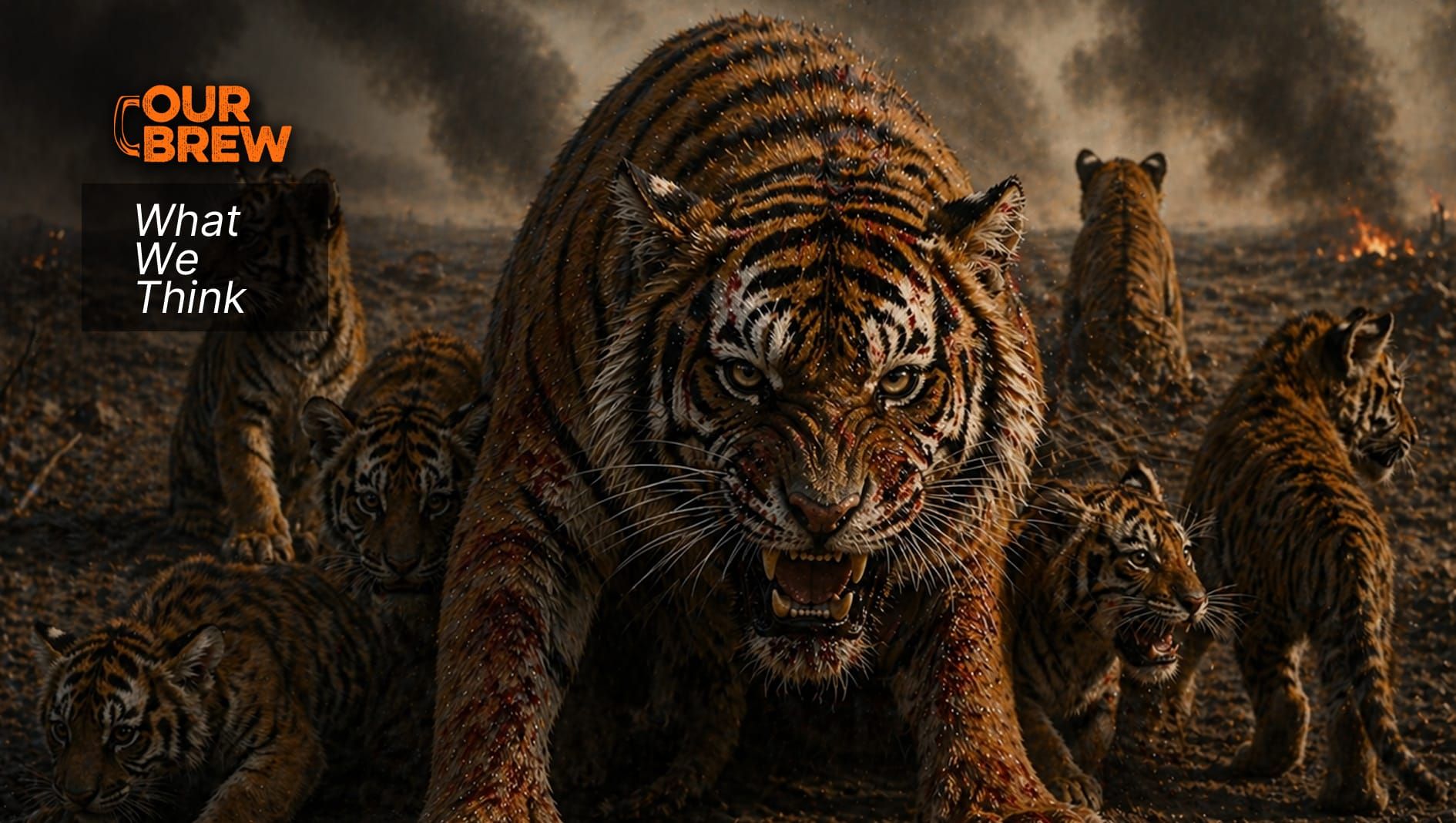
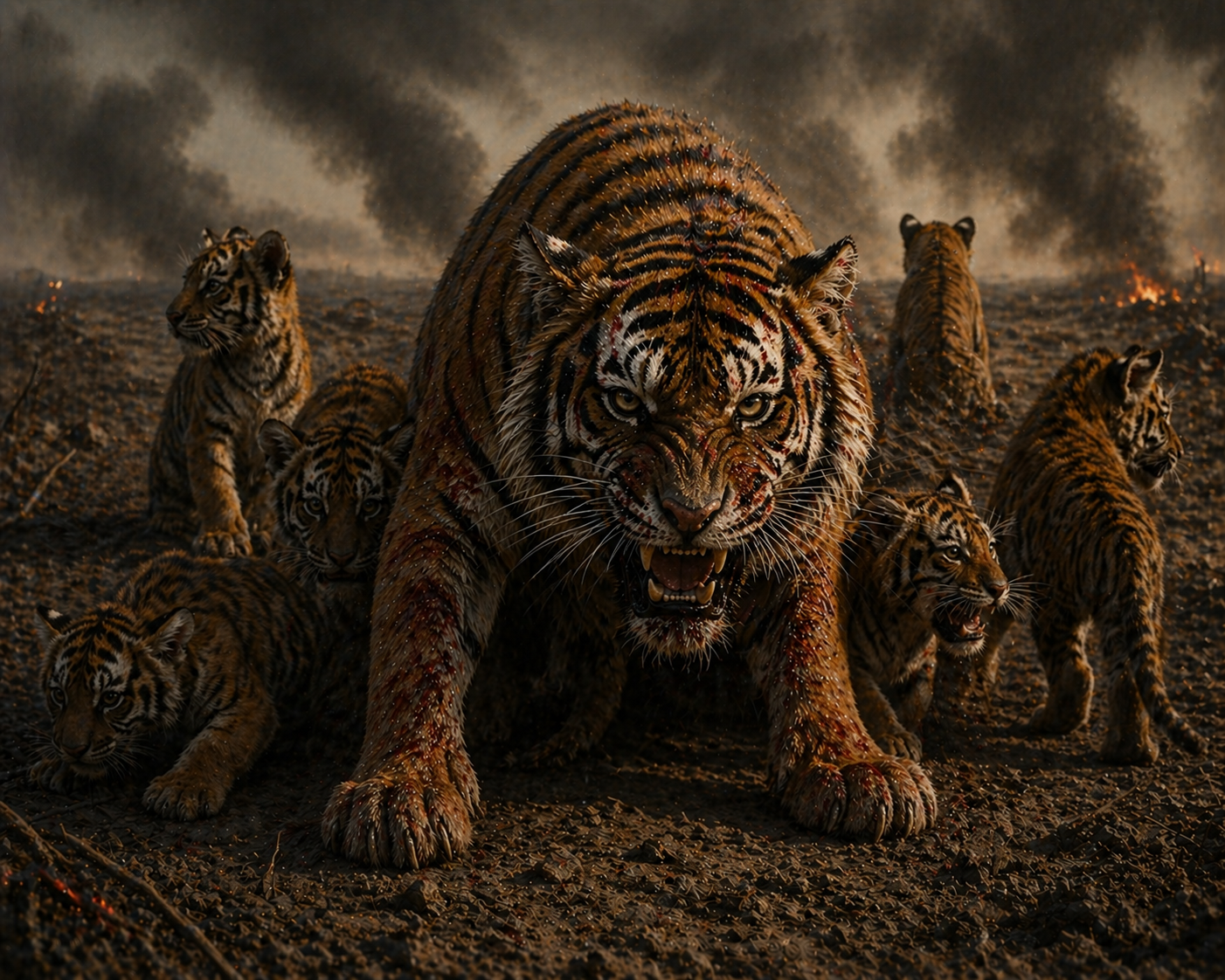
What explains the wounded tiger? With its back against the wall, injured, it grows more ferocious, no longer merely defending.
When an enemy dehumanizes your people, bombs schools, and speaks of erasing a civilization—a long spring of invention and thought—only one posture remains: to fight, not for victory alone, but for existence.
A wounded tiger is not stronger; it is simply less constrained.
Iran is reacting as a civilization that has learned, repeatedly, that pressure does not dissolve it. It unifies them.
TRUMP: “The Iranians are animals. That’s why blowing up their bridges and power stations isn’t a war crime.”
— Stew Peters (@realstewpeters) April 6, 2026
I’m at loss for words. pic.twitter.com/8qbbX7jo3d
Opposition softens, or pauses. The country closes ranks. Crowds gather, not as spectacle but as signal. Infrastructure becomes symbol—power plants, streets, institutions—things to be guarded by throngs of people not only for their function, but for what they stand for.
Systems built to survive do not depend on a single leader. Remove a leader, and the machinery continues. The military, security, institutional networks reproduce authority and coordinate response.
Bombing does not always fracture a society; it can produce what observers call “everyday nationalism”—a quieter, more pervasive attachment to country.
We return to our analogy.
The tiger stands over its young, injured, breathing hard, eyes fixed. It will not step back. Not because it believes it will win. But because it no longer recognizes any other choice.
If you liked what you just read and want more of Our Brew, subscribe to get notified. Just enter your email below.
Related Posts
When Stupidity Becomes Virtue
Sep 01, 2026
Elections 2028: Shady Characters Have Hijacked the Flood Control Issue
Aug 18, 2026
Asymmetrical Warfare: Who’s Still Afraid of the Big, Bad Wolf?
Aug 10, 2026