

By Joey Salgado
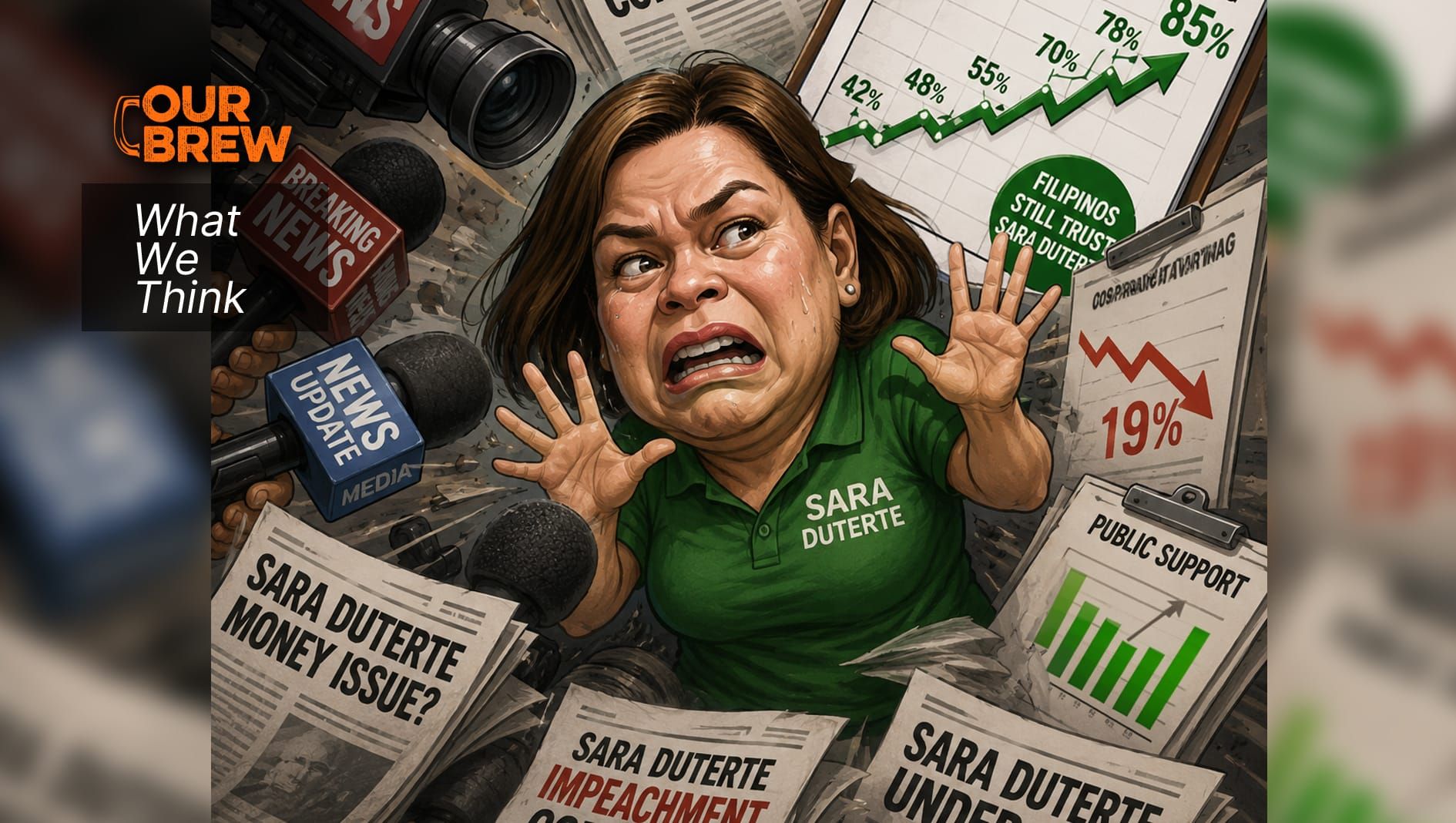
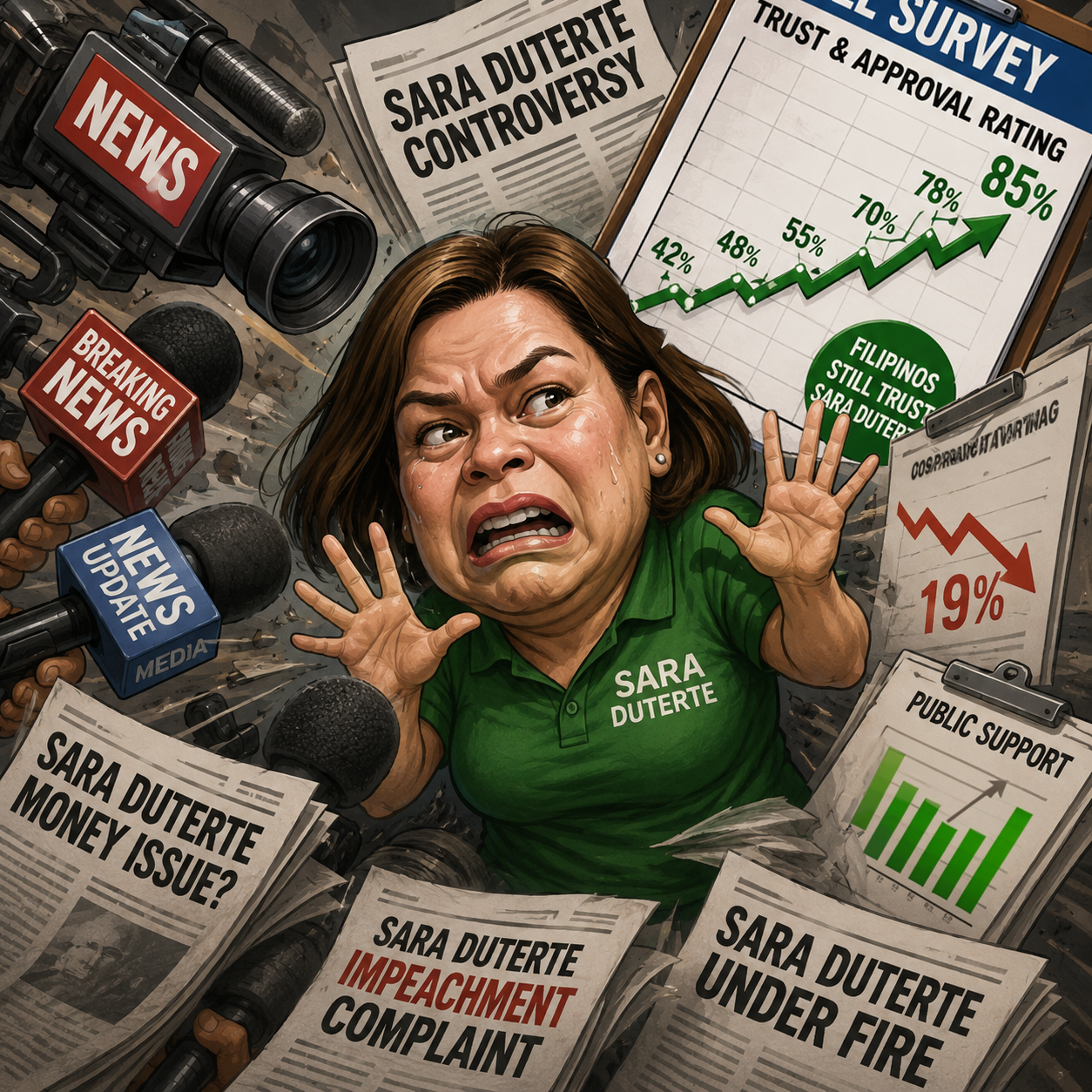
In the battle to swing the “soft” voters and the undecided to her side, Vice President Sara Duterte and her team have been committing a strategic miscalculation. This may have already cost her the presidency.
Let’s call it the frontrunner’s curse.
Faced with a renewed offensive in the House over unliquidated and irregularly disbursed confidential funds, billions in undeclared bank accounts, links to alleged drug lords, and her threat to assassinate the President and his family, the Vice President’s team looked at the surveys and decided everything’s just fine.
There’s reason to be complacent and conservative.
In recent pre-election surveys, she remained the top choice for president. The instinct to protect the lead rather than fight to dominate the narrative took over. The Duterte camp didn’t engage aggressively, choosing instead to deflect and deny without offering a credible counter-narrative.
The survey trap
Had they studied the numbers or seen past the topline, they would have seen the warning signs.
The Vice President and her team have fallen into the survey trap.
And she is not the first one. Other presidential contenders, better positioned and more organized, have been trapped before.
The 2010 and 2016 presidential campaigns offer instructive takeaways for the Vice President’s camp.
From 2008 to early 2010, Senator Manny Villar was the frontrunner in the polls. From 2013 to 2015, then Vice President Jejomar Binay topped all pre-election surveys. Both led their closest opponents by double-digit at one point. Both attracted new converts from different political groups, expanding their base into a formidable alliance. They had name recall, resources, machinery, and resonant personal narratives.
Then came the sustained political attacks that were left, generally, unanswered. Neither candidate survived.
Week after week, the campaign teams calculated that if they could hold on long enough, the attacks would dissipate. It did not. And when the decision was made to mount a strong counter, the attacks have already tainted the candidates.
Calibrated responses
Internal dynamics usually play a major part in the decision-making process of any campaign organization. Frontrunners attract groups and personalities of diverse, even opposing, political leanings. They bring prestige, notoriety, and their own agenda to the campaign.
Some are more invested in gaining proximity and access to the candidate than protecting the candidate. In some instances, they work at cross-purposes or take actions that undermine decisions made by the campaign.
But on the whole, frontrunner campaigns tend to resort to calibrated responses to minimize damage to their candidate’s survey rankings in the near term. The long-term cost turned out to be higher and irreversible. The damage shows in their failure to reshape public perception before it solidifies against their candidate.
The Vice President is on the same road.
A year ago, she would not even be bothered by an impeachment trial in the Senate. She had the numbers and a pliant chamber leadership. But political gravity has shifted yet again. With two years left to his term, the President is reasserting his clout.
The Senate math is now tilting, says several sources, towards the unimaginable.
The Vice President’s impeachment is a foregone conclusion. Her conviction at the Senate is no longer unthinkable. Not a certainty, but a possibility that could build its own momentum that not even a solid wall of hardcore supporters in Mindanao could stop.
Sure, she could still squeak through. But she will emerge battered and bruised, no longer the invincible and inevitable winner. A commissioned survey taken from February 27 to March 2 offers a reality check. The survey showed her tied with Senator Raffy Tulfo in a one-on-one scenario, and ahead by just a few points of Naga City Mayor and former Vice President Leni Robredo.
A frontrunner needs to fight a war on two fronts simultaneously: against the attackers and against the fear of eroding electability. Often, the result is a response that is neither aggressive enough to neutralize the threat nor restrained enough to look dignified.
The worst place to be in the face of incessant attacks is at the middle, to be reactive and to offer a defense that fails to convince the undecided.
Here’s the hard part. A survey lead is not an armor. It does not discourage opponents from mounting attacks. They do not slow down or back off and yield to the survey leader. On the contrary, the incentive to attack is even higher.
This article also appears in Rappler
If you liked what you just read and want more of Our Brew, subscribe to get notified. Just enter your email below.
Related Posts
When Stupidity Becomes Virtue
Sep 01, 2026
Elections 2028: Shady Characters Have Hijacked the Flood Control Issue
Aug 18, 2026
Asymmetrical Warfare: Who’s Still Afraid of the Big, Bad Wolf?
Aug 10, 2026